
How Much Does a Condo Bathroom Remodel Cost in Chicago?
A condo bathroom remodel in Chicago usually runs $15,000 to $45,000 or more, and the same job almost always costs more in a condo than it would in a single-family home. The bathroom is not the reason. The building is. Board approvals, freight elevator windows, restricted work hours, and a plumbing stack you share with the units above and below all add labor, coordination, and time that a house never charges you for.
If you own a condo or townhome anywhere from the Gold Coast to South Loop, this guide explains what you will actually pay, why your building drives the price as much as your tile choice does, and the line items that catch first-time condo remodelers off guard. If you are in a high-rise specifically, pair this with our guide to high-rise condo bathroom remodeling for the full project logistics.
At a Glance
Typical cost range: $15,000 to $45,000+, depending on bathroom size, finish level, and building requirements.
Biggest condo-specific cost drivers: board approval, freight elevator scheduling, restricted work hours, shared plumbing stacks, and waterproofing that protects the unit below.
Line items owners forget: building damage deposits, certificate of insurance requirements, and coordination with the building engineer or property manager.
Timeline: 3 to 6 weeks of work, plus 2 to 8 weeks of board approval before anyone swings a hammer.
Why Does a Condo Bathroom Cost More Than the Same Bathroom in a House?
In a single-family home, your contractor parks in the driveway, works whenever the schedule allows, and ties into plumbing that serves only your house. A condo strips away every one of those freedoms, and each one has a price.
Here is where the money goes that a house never asks for.
Building access and freight elevators
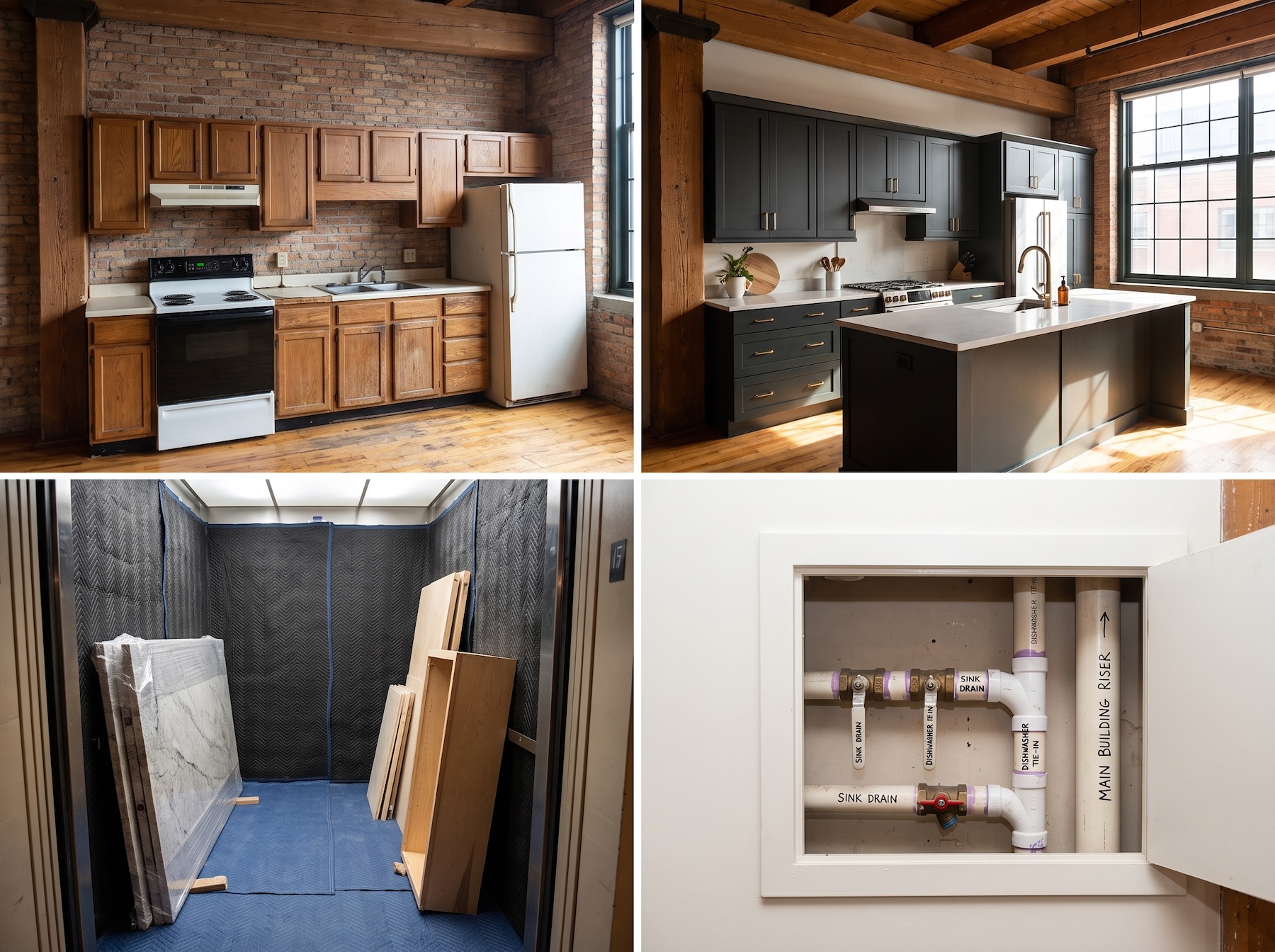
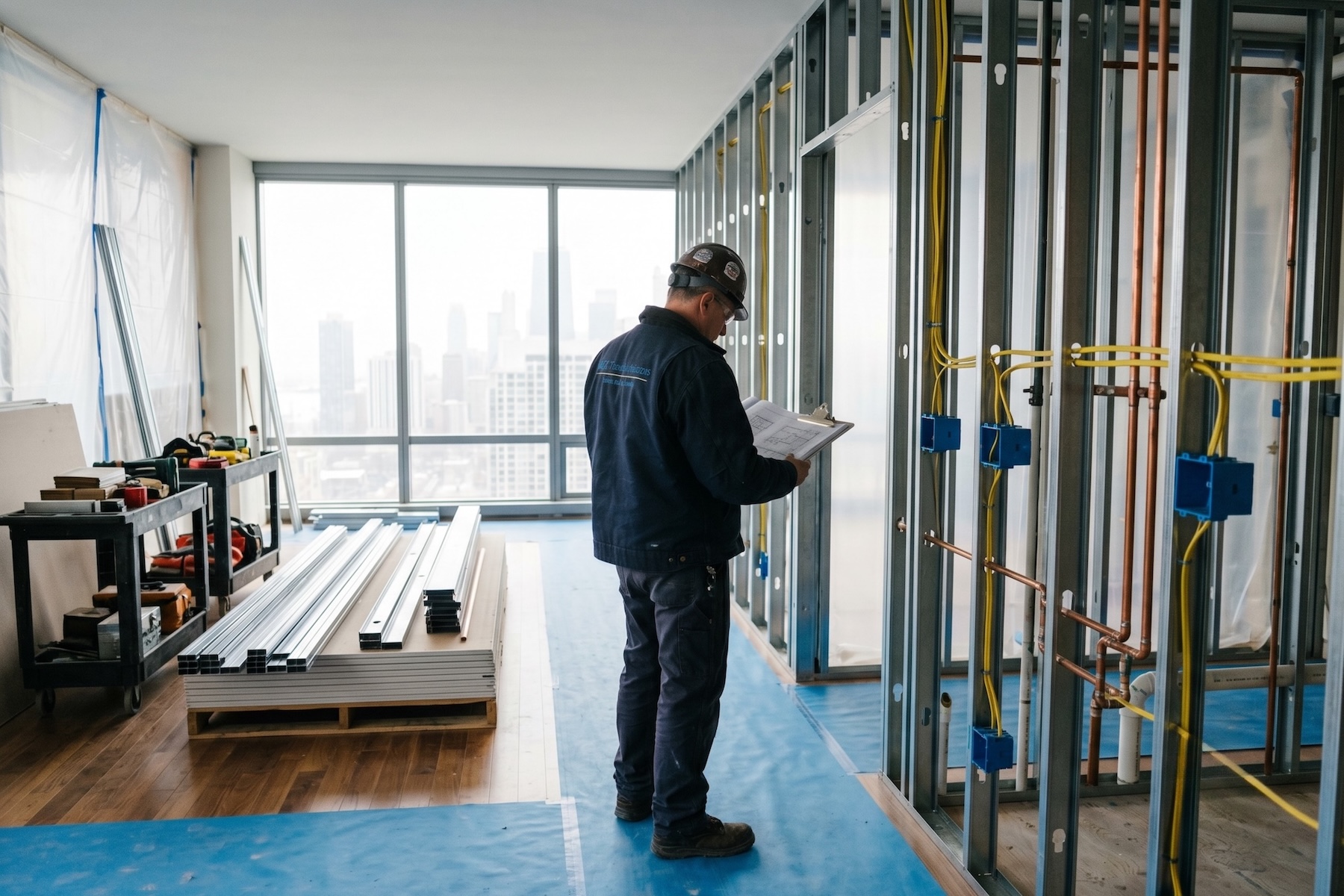
Most Chicago high-rises route all construction traffic through a single freight elevator that has to be reserved, sometimes days in advance, and is often shared with movers and other trades. Demolition debris, new vanities, tile, and tubs all move on the building schedule, not yours. That means more trips, more labor hours, and crews that sometimes wait. In a tall building with one freight car, access alone can add a meaningful chunk to the labor line.
Restricted work hours
Many buildings only allow construction noise between roughly 9 a.m. and 5 p.m. on weekdays, with nothing on weekends or holidays. A job that would take two uninterrupted weeks in a house can stretch across four or more weeks of approved windows. Labor is billed by time, so a compressed schedule that keeps getting interrupted costs more than the same scope in a home you control.
Shared plumbing stacks
Your condo bathroom ties into a vertical plumbing stack that runs through every unit in your line. Shutting water down to make a connection often requires building approval and advance notice to neighbors, and moving a drain more than a few inches can be impossible without opening a wall in another unit. The work is more delicate, slower, and more skilled than the same connection in a basement you own outright.
Waterproofing to protect the unit below
A leak in a house damages your own ceiling. A leak in a condo damages your downstairs neighbor and becomes your liability. Chicago condo bathroom remodels are built with serious waterproofing, full shower pan membranes, proper sloping, and sealed transitions, because the cost of getting it wrong is a claim from the unit below. That extra protection is labor and material you will see on the estimate, and it is money well spent.
What You Will Actually Pay: Condo Bathroom Cost Tiers
Condo bathroom budgets fall into three rough tiers. These ranges reflect Chicago condo and townhome work specifically, which tends to land at the higher end of citywide bathroom pricing because of the building factors above. For the full picture across houses, condos, and townhomes, see our Chicago bathroom remodel cost guide.
Secondary or guest bath: $15,000 to $24,000
A smaller condo bathroom with a tub-shower combo, a new vanity, tile, fixtures, and updated lighting, with the layout staying put. This is the most common condo project and the easiest to get through a board. Keeping the plumbing where it is keeps the price down.
Full primary bath: $25,000 to $40,000
A complete remodel of a primary bathroom with a separate shower, a double vanity, upgraded tile, and quality fixtures. Some plumbing may shift within the existing footprint. This is the sweet spot for owners staying long term in neighborhoods like Lincoln Park, West Loop, and Lakeview. Tight condo bathrooms often gain the most from custom carpentry and built-ins that carve real storage out of awkward corners. For a real project, see a recent bedroom-to-bathroom conversion in Wicker Park.
High-end or gut remodel: $40,000 and up
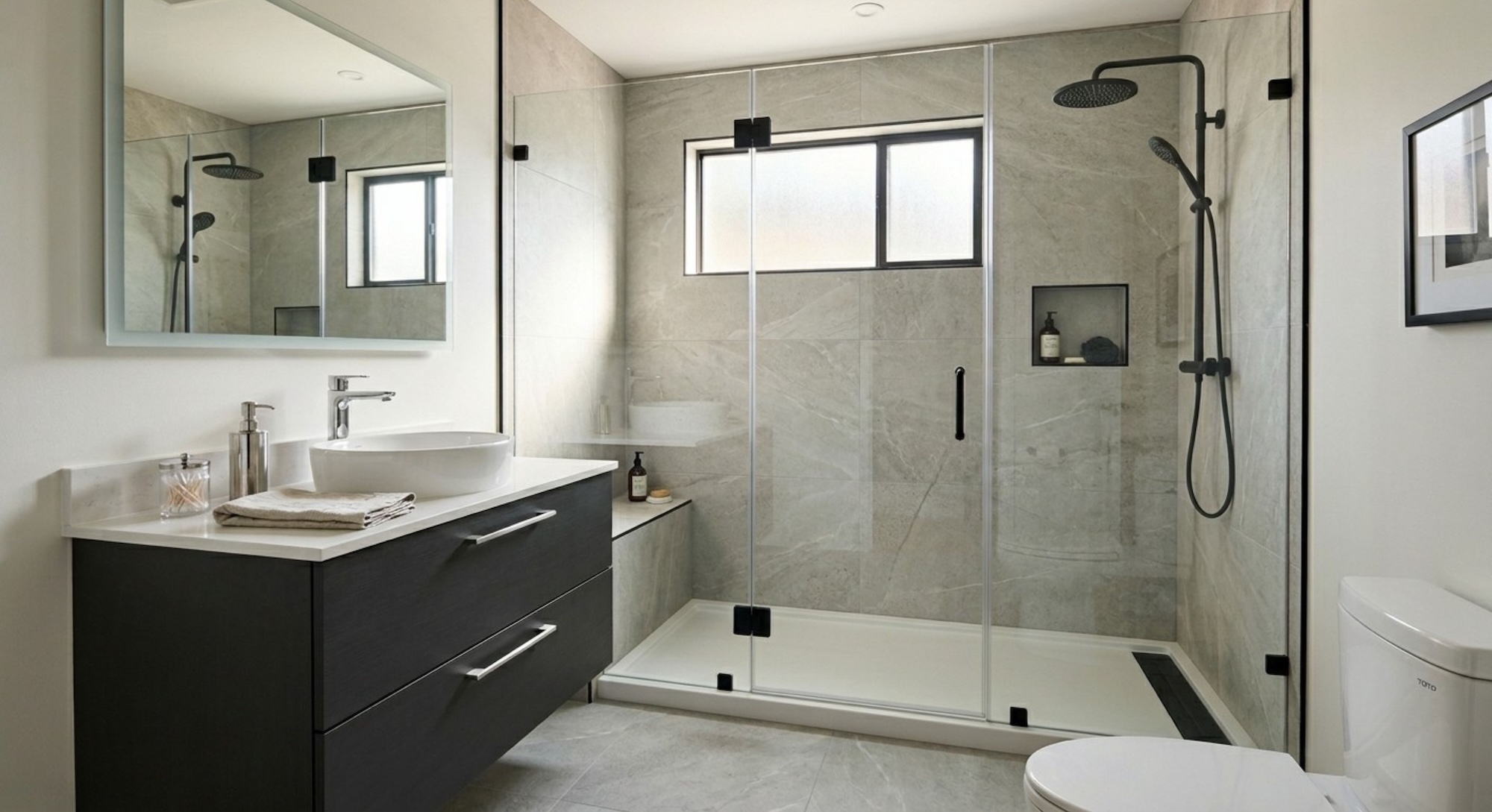
A taken-to-the-studs renovation with a curbless shower, heated floors, custom storage, stone, and designer fixtures, often in a River North or Streeterville high-rise. At this level the finishes drive the budget, but the building requirements still add a layer that a house would not. Owners taking a bathroom this far are frequently planning kitchen remodeling or a full whole home renovation at the same time. Townhome owners often weigh a bathroom alongside basement finishing, which carries its own building-by-building math.
The Condo Line Items That Surprise First-Time Remodelers
The estimate from your contractor is only part of the picture. Your building adds its own costs, and they catch almost every first-time condo remodeler by surprise. Our Chicago condo remodeling guide covers the HOA approval process and building rules in more depth.
Construction or damage deposit. Many buildings hold a refundable deposit, often $500 to several thousand dollars, to cover any damage to common areas during the work.
Certificate of insurance (COI). Your contractor has to provide proof of insurance naming the building and the association, with specific coverage limits. A contractor who cannot produce a compliant COI quickly is a red flag in any high-rise.
Board approval and document fees. Some associations charge a review or processing fee, and many require detailed plans, which can mean drawings you pay to produce before the board will even consider the project.
Engineer or management coordination. Buildings often require sign-off from a building engineer on anything touching plumbing or structure, and that coordination takes time that lands on the schedule.
How Your Building's Age Changes the Number
Two condos with identical bathrooms can have very different price tags depending on when the building went up.
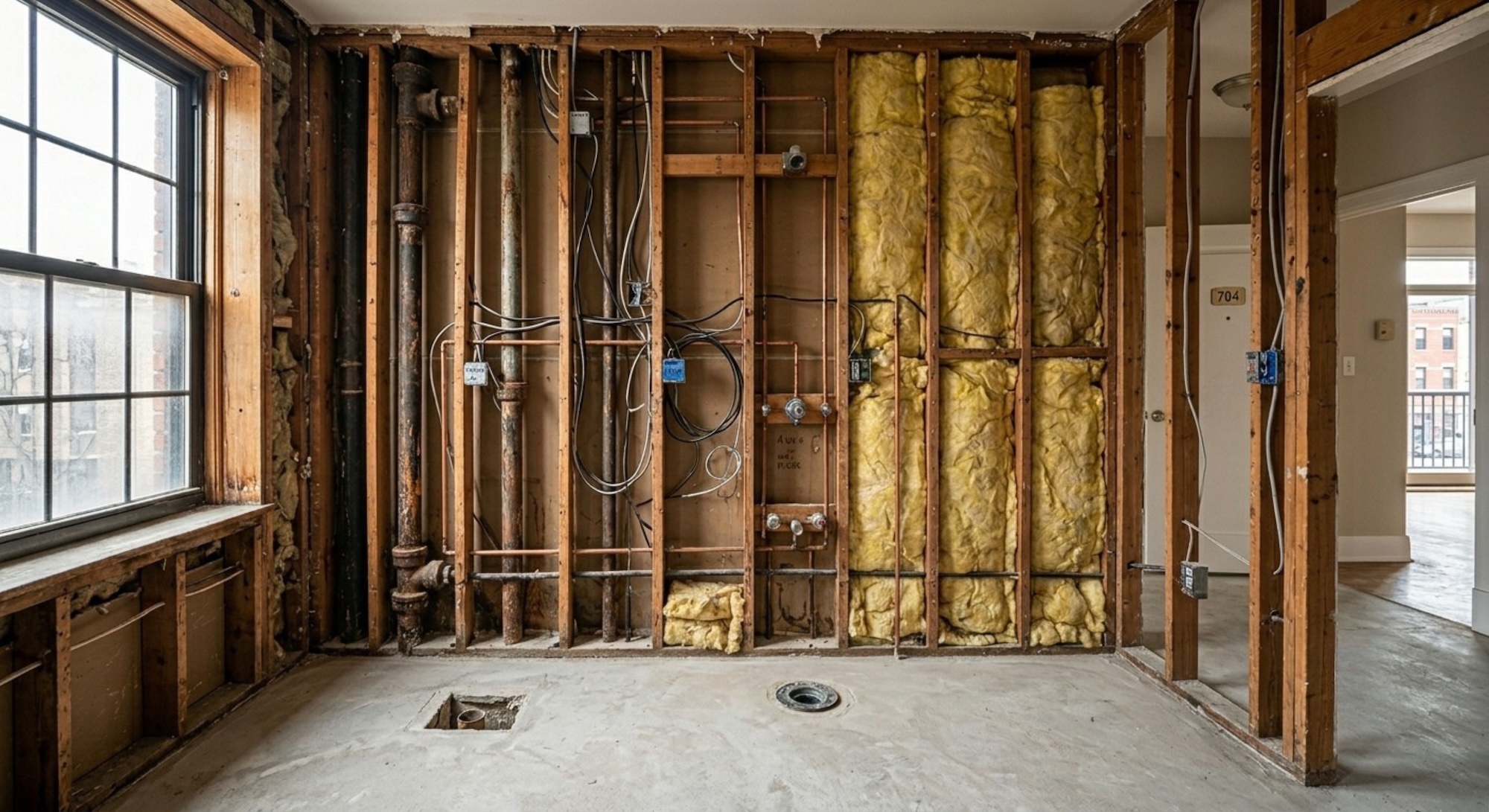
High-rises built between the 1960s and 1990s, common across Gold Coast and Streeterville, often have aging cast iron drains and original supply lines that need attention once a wall is open. Vintage walk-ups and two-flats in Bucktown and Logan Square can hide galvanized pipe and outdated wiring behind the tile. Newer construction is usually cleaner to work in, but tighter building rules and stricter waterproofing standards can offset that. The point is simple: in an older building, budget a contingency, because the wall rarely tells the truth until it is open. We break down those behind-the-wall surprises in our guide to the hidden costs of a Chicago bathroom remodel.
Is a Condo Bathroom Remodel Worth the Money?
For most Chicago condo owners, yes, especially if you plan to stay. According to the 2025 Cost vs. Value Report from Zonda and Remodeling Magazine, a midrange bathroom remodel recoups about 74 percent of its cost nationally, one of the stronger returns of any interior project. That figure is a national benchmark, not a Chicago number, and resale value is only part of it. In a competitive condo market, an updated bathroom is often what moves a unit, and the daily payoff of a space that works is hard to put a percentage on. Whether you are refreshing a single guest bath or planning full bathroom remodeling across the unit, the building factors above are what shape the budget. This building-by-building reality is exactly what our condo renovation work is built around.
Condo Bathroom Remodel Cost FAQ
How much does a condo bathroom remodel cost in Chicago?
Most Chicago condo bathroom remodels run $15,000 to $45,000 or more. A smaller guest bath with the layout unchanged sits at the low end, while a gut remodel of a primary bath with high-end finishes lands at the top. Building requirements push condo pricing toward the higher end of citywide bathroom costs.
Why does remodeling a condo bathroom cost more than one in a house?
The building adds costs a house never does. Freight elevator scheduling, restricted work hours, board approvals, shared plumbing stacks, and waterproofing to protect the unit below all add labor and coordination time. The finishes can be identical, but the logistics are not.
Do I need board approval to remodel my condo bathroom in Chicago?
Almost always. Most Chicago associations require an application, contractor proof of insurance, and sometimes plans before any work begins. Approval can take anywhere from a couple of weeks to two months, so factor it into your timeline before you commit to a start date.
How long does a condo bathroom remodel take in a Chicago high-rise?
Plan on 3 to 6 weeks of actual work, plus the approval period before it starts. Restricted work hours and freight elevator scheduling stretch the calendar, so a project that would take two weeks in a house often runs four or more in a high-rise.
What is a certificate of insurance and why does my building want one?
A certificate of insurance, or COI, is proof that your contractor carries liability and workers' compensation coverage, with the building and association named. Buildings require it so they are protected if something goes wrong during the work. A contractor who cannot produce a compliant COI fast should not be working in a high-rise.
Can you move plumbing in a Chicago condo bathroom?
Sometimes, but within limits. Because your bathroom ties into a shared stack, drains can usually only move a few inches without opening a wall in another unit, which is rarely allowed. A skilled contractor designs the new layout around the existing stack, which keeps both the cost and the building drama down.
What is the most expensive part of a condo bathroom remodel?
Labor, more often than materials. The skilled, careful work of waterproofing, tying into a shared stack, and building around restricted access and tight schedules is what separates a condo budget from a house. Tile and fixtures matter, but the building is usually what makes a condo bath cost more.