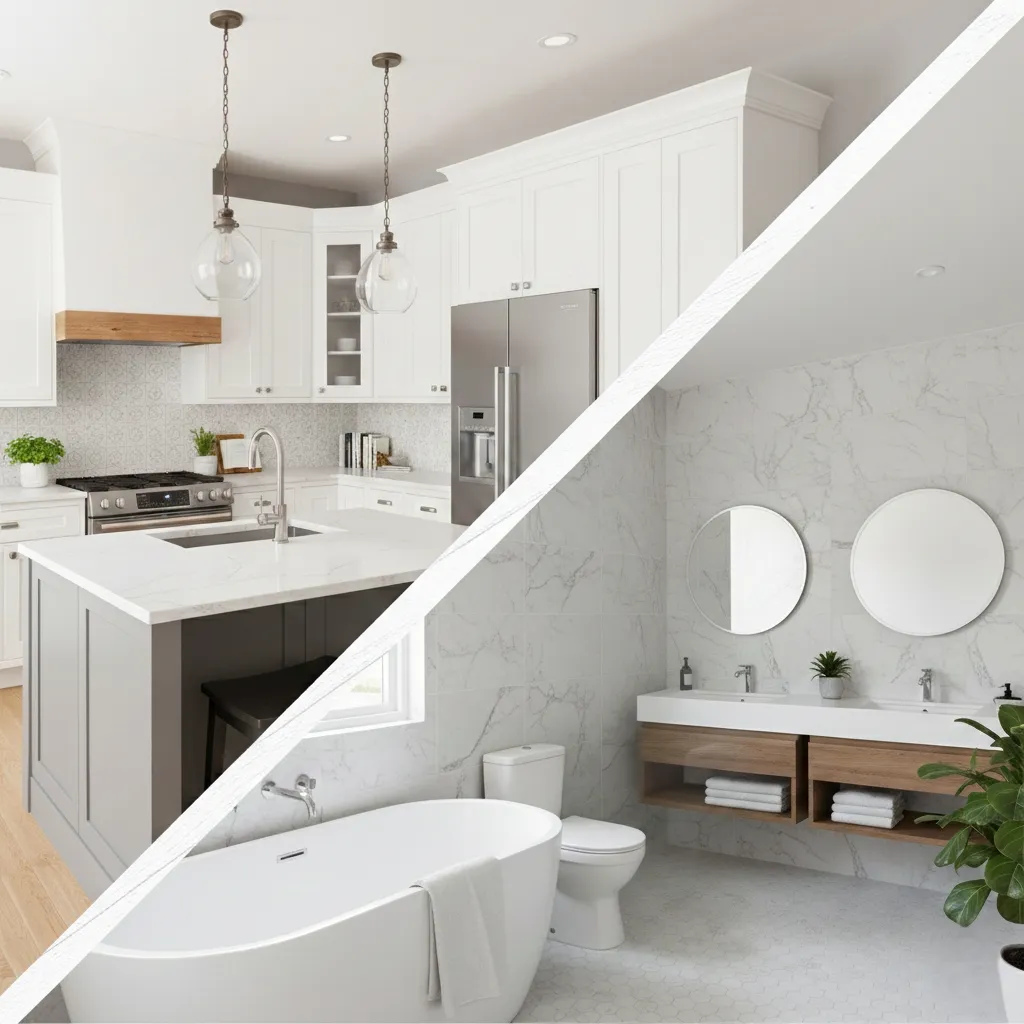


What Do You Need to Know Before Remodeling a Chicago Condo or Townhome?
Remodeling a condo or townhome in Chicago differs dramatically from renovating a single-family home. HOA approvals, building restrictions, limited work hours, elevator logistics, and shared systems create unique challenges. This guide covers everything you need to know about Chicago condo kitchen and bathroom renovations.
How Much Does It Cost to Remodel a Condo in Chicago?
Condo renovations cost 15-30% more than single-family homes due to building restrictions and logistics challenges. Kitchen remodels range $28,000-95,000. Budget projects with stock cabinets start around $28,000-48,000. Mid-range renovations featuring semi-custom cabinetry and quality finishes run $50,000-70,000. Luxury kitchens with custom cabinetry and premium materials exceed $75,000-95,000.
Bathroom renovations cost $16,000-52,000. Powder rooms run $11,000-26,000, full bathrooms $18,000-42,000, and primary bathrooms $35,000-65,000+. High-rise buildings add 15-22% to these ranges.
Full unit renovations combining kitchen, bathrooms, and cosmetic updates run $75,000-180,000+. Gold Coast and Lincoln Park units command 20-30% premiums.
How Do You Get HOA Approval for a Condo Remodel in Chicago?
Nearly all Chicago condo renovations require HOA approval before city permits. The process adds 4-10 weeks to timelines. Application packages require detailed renovation plans, material selections, fixture specifications, and contractor information. Submit architectural drawings for structural changes, plumbing diagrams, electrical plans, and tile layouts.
Buildings require contractor proof of insurance, license verification, and subcontractor contacts. Application fees range $350-850. Review timelines vary - well-organized associations approve in 3-4 weeks, while complex processes take 8-12 weeks.
Common requirements include restricted work hours (typically 9am-4pm weekdays), elevator reservations ($150-350 per use), security deposits ($1,500-4,000), and $2 million liability insurance. Neighbor notification is often required.
Do You Need a Permit to Remodel a Condo in Chicago?
After HOA approval, you need City of Chicago permits. Kitchen remodels require permits for plumbing relocations, electrical upgrades, or structural changes. Bathroom renovations need permits for plumbing, electrical, or ventilation work. Permit costs run $1,200-3,500. Kitchen permits typically cost $1,800-3,200, bathroom permits $1,200-2,400.
Inspections occur at rough-in and final stages. Unpermitted work creates serious problems when selling - title companies require documentation, and buyers can demand proof of permitted work.
Why Does a Condo Remodel Cost More Than a House Remodel?
Restricted work hours impact labor costs significantly. Most condos limit construction to 9am-4pm weekdays (30 hours weekly) versus 50-60 hours in unrestricted homes. Projects take 20-35% longer, increasing total labor costs.
Elevator logistics add $150-350 per reservation. Deliveries require advance scheduling. Building protection (hallway runners, elevator padding) adds $800-1,800. Some buildings charge parking fees or require worker passes.
Shared plumbing and electrical systems need coordination with adjacent units and building management. Work affecting shared stacks requires notifications and sometimes temporary shutoffs. These coordination needs add 10-18% to costs.
What Are the Challenges of Remodeling a Kitchen in a Chicago Condo?
Layout restrictions often prevent major reconfigurations. Buildings prohibit relocating kitchens due to plumbing stack locations. Moving sinks or dishwashers within kitchens adds $4,000-9,000 and may require building approval. Most successful condo kitchens maintain existing footprints while updating finishes.
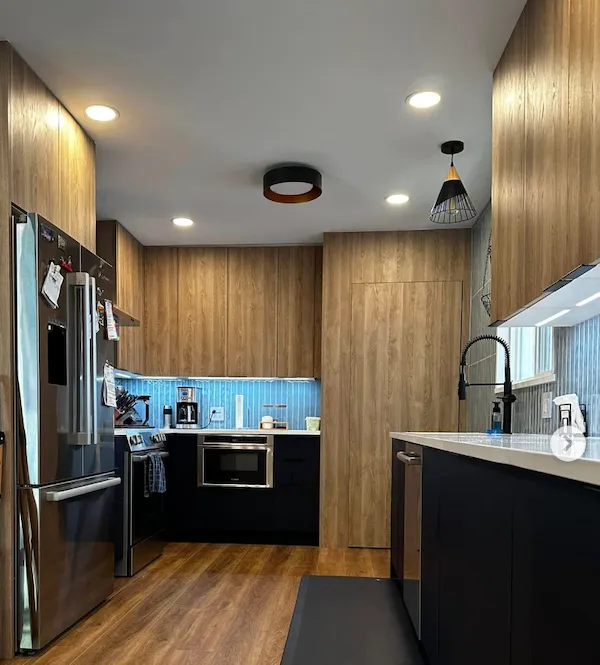
Storage solutions become critical. Custom cabinetry maximizes space through pull-out pantries, appliance garages, and vertical storage. Floor-to-ceiling cabinets use available height. Integrated appliances create streamlined looks in small spaces.
Countertop selections balance aesthetics with logistics. Quartz dominates due to durability and low maintenance. Large slabs require careful measurement to fit through hallways and elevators. Installation may require on-site cutting in condos.
What Makes Condo Bathroom Remodels Different?
Plumbing stack locations dictate layouts. Toilets connect directly to shared vertical stacks and cannot typically move without major coordination. Keep fixtures near existing locations to control costs and avoid complex approvals.
Waterproofing becomes critical in multi-unit buildings. Water damage affecting units below creates liability. Proper membranes under tile, around shower pans, and in wet areas protect your unit and neighbors. Chicago codes require specific standards for multi-family buildings.
Ventilation often needs creative solutions. Bathrooms without windows must have exhaust fans venting outside. High-rise condos may need long duct runs to building systems. Some buildings restrict installations or require specific models.
Heated floors have become expected features, adding $1,800-3,200 but delivering comfort and resale appeal in Chicago's climate.
How Should You Budget for a Chicago Condo Renovation?
Base renovation costs cover materials and labor. Add 15-30% for condo-specific premiums (restricted hours, elevator fees, building protection, compliance requirements). HOA application fees and security deposits require upfront payment.
Permit and approval costs total $2,000-5,000 for typical projects. Contingency budgets of 15-20% protect against building system surprises that only appear during construction.
How Long Does a Chicago Condo Remodel Take?
Pre-construction takes 6-12 weeks versus 2-4 weeks in houses. HOA approval consumes 4-8 weeks, city permits another 3-5 weeks. Start planning 3-4 months before desired construction start.
Construction runs 25-40% longer than single-family homes. A 6-week kitchen remodel takes 8-10 weeks in condos. Bathroom renovations extend from 4 weeks to 5-7 weeks. Factor these extensions into planning.
Summer sees peak activity with contractors booking 2-3 months ahead. Winter may offer better availability and pricing.
What Should You Look for in a Chicago Condo Remodeling Contractor?
Condo-specific experience matters enormously. Ask about recent projects in similar buildings. High-rise specialists understand logistics and restrictions. Request condo-specific references.
Building familiarity provides advantages. Contractors who've worked in your building understand requirements and management preferences. They navigate approval processes efficiently.
Verify Chicago General Contractor license, trade licenses, and insurance meeting building requirements ($2 million liability naming building as additional insured).
Strong communication and project management become critical due to coordination complexity with building management, HOA boards, neighbors, inspectors, and trades.
What Are the Most Common Condo Remodeling Mistakes?
Never start work before written HOA approval. Rejected applications mean expensive reversals or wasted materials. Underestimating condo-specific costs leads to budget shortfalls - use condo ranges, not single-family estimates.
Notify neighbors even if not required. Renovation noise and disruption affect adjacent units significantly. Courtesy notices prevent conflicts. Hiring inexperienced contractors causes approval problems, cost overruns, and work not meeting building standards.
Ready to Plan Your Chicago Condo Remodel?
Chicago condo remodeling requires understanding HOA approvals, building restrictions, shared systems, and logistics premiums. Success comes from experienced contractors, realistic budgets for condo-specific costs, appropriate timelines, and following all building requirements. Whether updating a South Loop high-rise kitchen or renovating a Lincoln Park vintage condo bathroom, proper planning ensures results that meet building standards while delivering the space you envision.