
Why Is Remodeling a Bathroom in a Chicago High-Rise Different?
Remodeling a bathroom in a Chicago high-rise condo is a fundamentally different project than renovating a bathroom in a single-family home. The finished product may look similar, but the process, logistics, costs, and technical requirements are shaped by factors that simply do not exist outside of a multi-unit building. Space limitations, shared plumbing systems, strict HOA regulations, building access restrictions, and the reality that your renovation happens just feet from your neighbors all influence how the project is planned and executed.
Chicago has one of the densest concentrations of high-rise residential buildings in the country, spanning neighborhoods from the Gold Coast and Streeterville to South Loop, West Loop, and River North. Many of these buildings were constructed between the 1960s and 1990s, meaning their plumbing systems, electrical infrastructure, and building envelopes are aging and often need attention during any renovation. Understanding the unique challenges of high-rise bathroom remodeling helps you plan realistically, budget accurately, and choose a contractor who knows how to navigate these complexities.
How Do You Get HOA Approval for a High-Rise Bathroom Remodel?
Nearly every Chicago high-rise condo association requires formal approval before any renovation work begins. This process varies by building but typically involves submitting detailed plans, contractor insurance certificates, a projected timeline, and sometimes a refundable security deposit to protect common areas during construction. HOA review fees generally range from $300 to $700.
The approval timeline can take anywhere from two to six weeks depending on your building’s board meeting schedule and review process. Some buildings have architectural review committees that meet monthly, meaning a missed deadline can push your start date by four weeks or more. Planning for this lead time is essential and is one of the first things we discuss with condo clients.
Most Chicago high-rise associations also impose specific renovation rules that directly affect your project. Common requirements include restricted work hours, typically 8 or 9 AM to 5 PM on weekdays with no weekend work allowed. Many buildings require contractors to use freight elevators exclusively for material transport and mandate floor protection in hallways and common areas during the project. Some associations require that the general contractor carry specific insurance minimums and name the condo association as an additional insured party.
Working with a contractor who has experience in Chicago high-rise renovations makes this process significantly smoother. An experienced contractor already understands the standard requirements, has insurance documentation ready, and knows how to work within the constraints without delays or fines.
What Is Stack Plumbing and How Does It Affect Your Remodel?
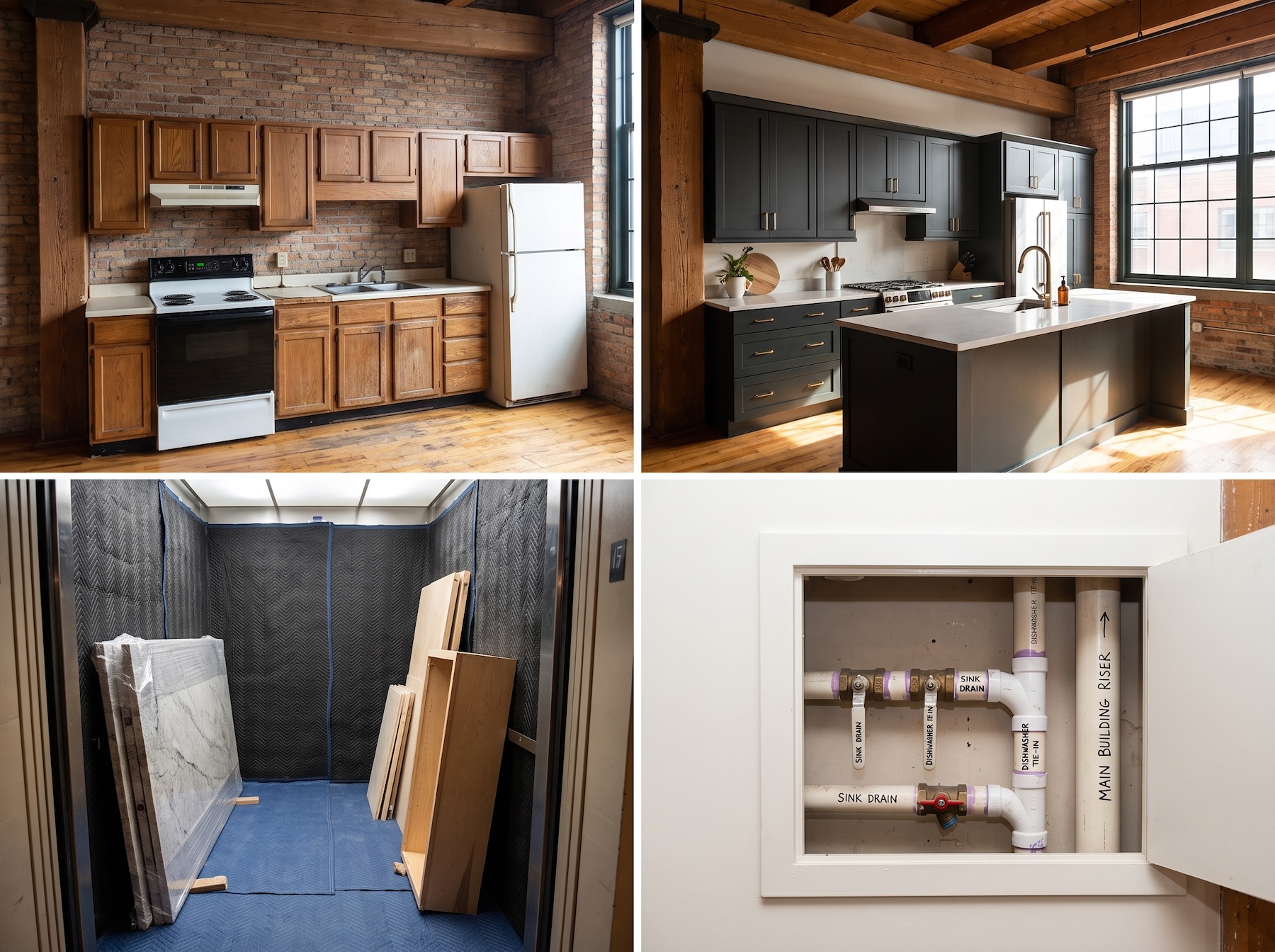
One of the most important technical differences in a high-rise bathroom remodel is the plumbing system. High-rise buildings use vertical stack plumbing, where waste and water lines run vertically through the building and serve multiple units on each floor. Your bathroom’s drain lines and water supply connect to these shared stacks, which means that plumbing work in your unit can potentially affect units above and below you.
This has several practical implications. Moving a toilet, shower, or sink to a new location is significantly more complex and expensive in a high-rise than in a single-family home. Relocating fixtures requires rerouting drain lines while maintaining proper slope for drainage, which is constrained by the floor depth between your unit and the ceiling of the unit below. In many Chicago high-rises, the available space between the structural slab and the finished ceiling below is limited, which can restrict how far fixtures can be moved.
Any plumbing work that requires shutting off water to the stack affects multiple units in the building. These shutoffs must be scheduled through your building’s property management, often days or weeks in advance, and typically have strict time limits. An experienced contractor plans the work so that shutoffs are minimized and completed efficiently, reducing disruption to your neighbors and keeping the project on schedule.
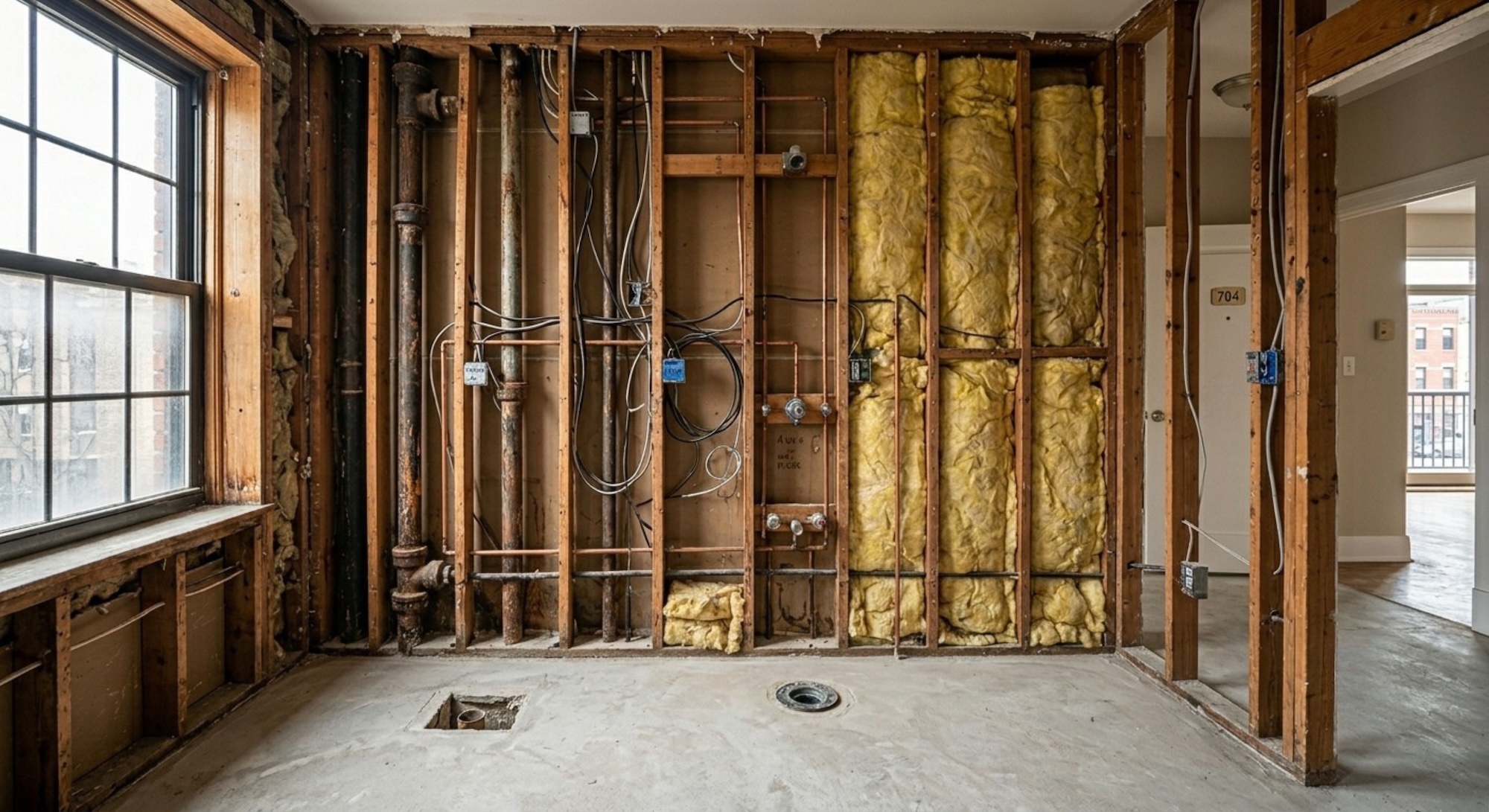
In older Chicago high-rises, the plumbing stacks themselves may be aging. Cast iron drain stacks and galvanized water supply lines are common in buildings from the 1960s and 1970s. While a bathroom remodel does not typically require replacing the main stacks, your contractor should inspect the connections between your unit’s plumbing and the building stacks to ensure everything is in good condition. Addressing a corroded connection during the remodel is far less expensive than dealing with a leak after the new bathroom is finished.
How Important Is Waterproofing in a High-Rise Bathroom Remodel?
Waterproofing is arguably the most critical technical element in a high-rise bathroom remodel. Unlike a single-family home where a shower leak might damage your own basement, a waterproofing failure in a high-rise means water penetrating the ceiling of the unit below you. This can result in costly damage, strained neighbor relationships, and potential liability through your condo association.
Proper waterproofing in a high-rise bathroom involves applying a continuous waterproof membrane to the shower floor and walls before tile installation. The membrane must extend up the walls at least several inches above the highest expected water line, and all seams, corners, and penetrations for plumbing fixtures must be sealed with compatible products. The shower floor must be properly sloped toward the drain to prevent water from pooling.
Many Chicago condo associations now require waterproofing documentation or even third-party inspection of waterproofing work before tile installation can proceed. This is a reasonable requirement that protects all owners in the building. A contractor experienced in high-rise bathroom remodeling will use proven waterproofing systems, document the work with photos, and be comfortable with any inspection requirements your building mandates.
Beyond the shower, high-rise bathroom floors often benefit from a waterproof membrane under the tile. While not always required, this additional layer of protection prevents any moisture from migrating through the floor slab and provides extra peace of mind for both you and the unit below you.
How Do Materials and Contractors Get Into a High-Rise Building?
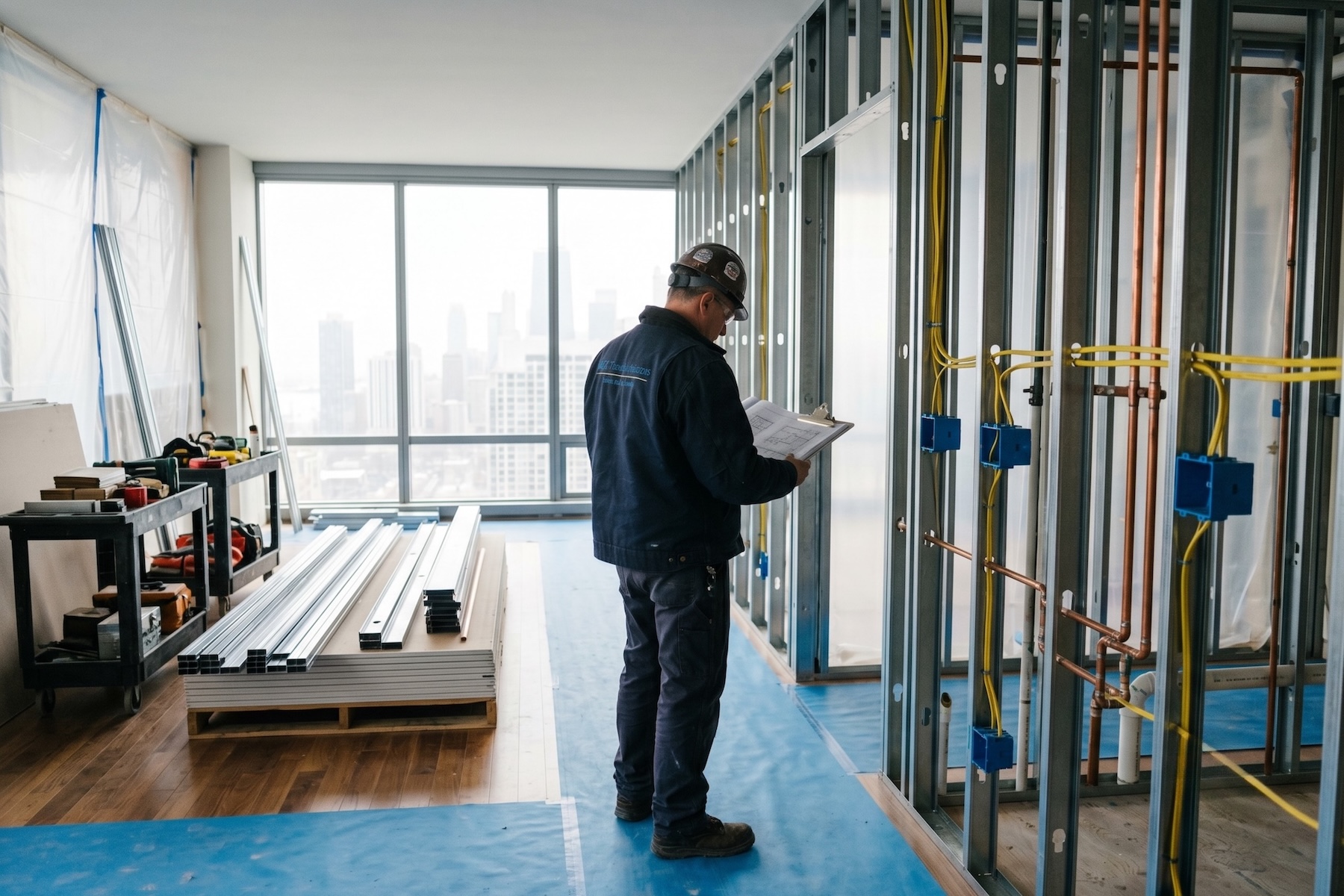
Getting materials into a high-rise unit is more complicated and more expensive than unloading a truck in a driveway. Every tile, vanity, fixture, and bag of mortar must travel through the building lobby, up a freight elevator, and down a hallway to your unit. This adds time and cost that do not exist in other types of construction.
Freight elevator access is typically scheduled through building management, and your contractor may be sharing elevator time with other residents moving in or out and with building maintenance. Efficient contractors plan material deliveries to minimize elevator trips, often staging materials in advance so that everything needed for a particular phase of work is already in the unit when that phase begins.
Debris removal follows the same path in reverse. Demolition of an existing bathroom generates a significant volume of old tile, drywall, fixtures, and mortar that must be bagged, transported down the freight elevator, and hauled away. Many buildings require that debris removal happen during specific hours and that contractors protect floors and walls along the route. Some buildings charge additional fees for dumpster placement or require contractors to use specific disposal services.
Parking is another logistical consideration in Chicago high-rise neighborhoods. Contractor vehicles need parking near the building for material unloading, and in neighborhoods like South Loop, West Loop, and River North, street parking is limited and expensive. Some buildings offer temporary loading zone access, but this needs to be arranged in advance.
How Much Does a High-Rise Bathroom Remodel Cost in Chicago?
High-rise bathroom remodels in Chicago generally cost 15 to 25 percent more than comparable projects in single-family homes, due to the logistical complexity, delivery challenges, restricted schedules, and additional coordination required.
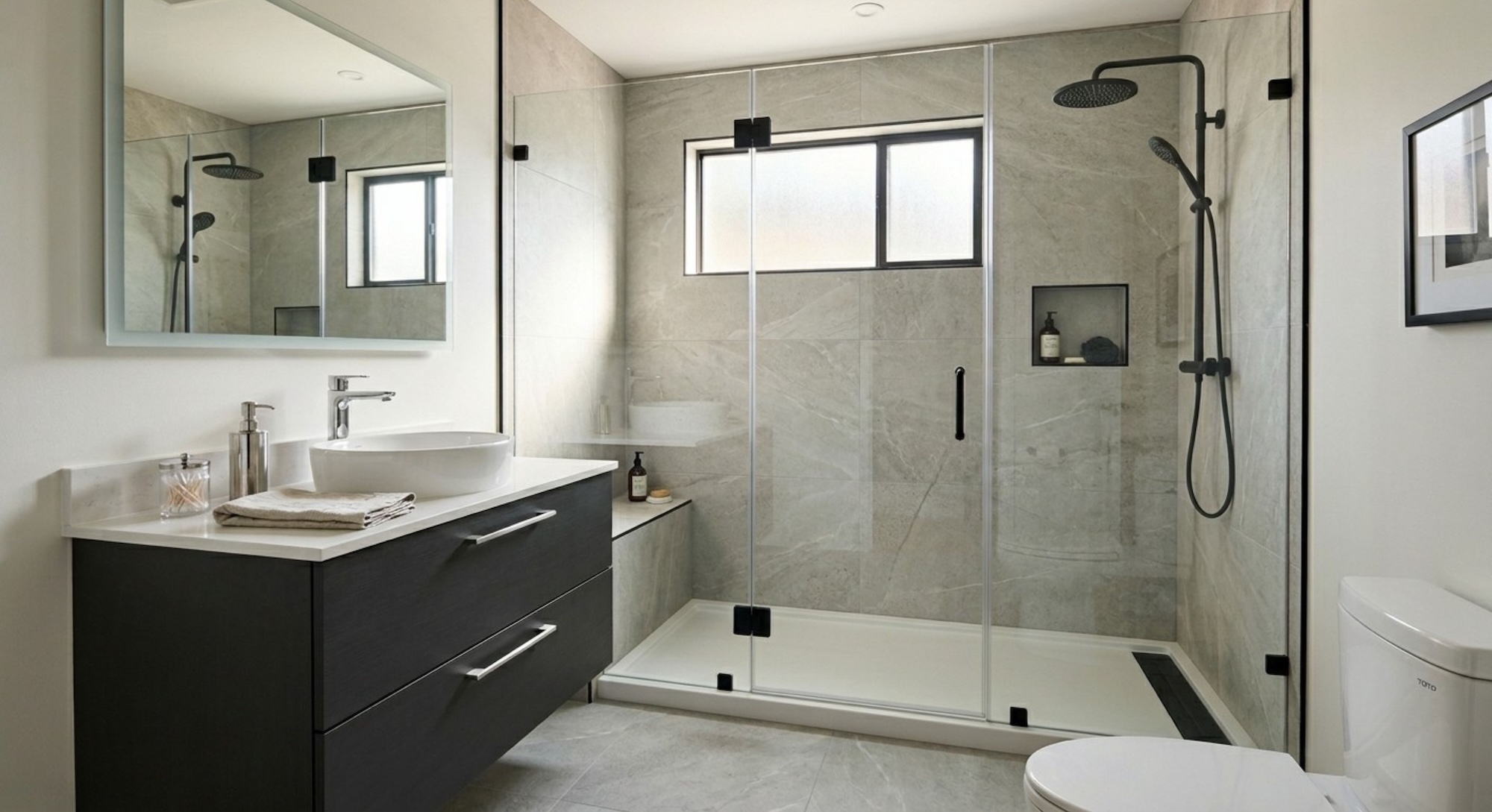
A standard high-rise bathroom remodel in Chicago that replaces fixtures, tile, vanity, and lighting within the existing layout typically costs between $20,000 and $35,000. This range covers a full renovation of a standard-size bathroom with quality mid-range materials, proper waterproofing, and professional installation.
A higher-end high-rise bathroom renovation with premium tile, custom vanity, upgraded fixtures, and design-forward finishes generally falls between $35,000 and $60,000. Projects at this level often include heated flooring, frameless glass shower enclosures, and natural stone surfaces.
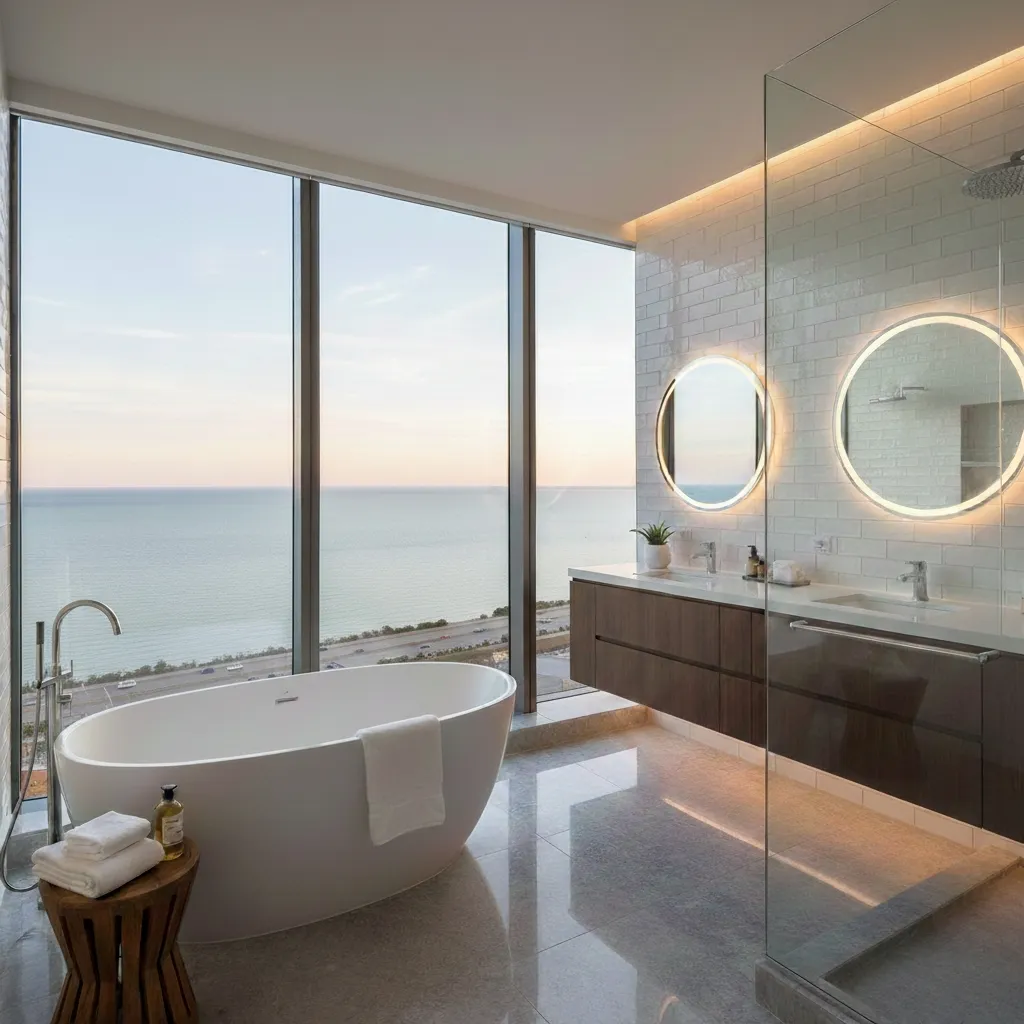
Luxury primary bathroom renovations in premium Chicago high-rises can exceed $60,000 to $90,000 or more, particularly when the scope includes layout changes, custom cabinetry, high-end natural stone, and spa-inspired features like rain showerheads with multiple body sprays, freestanding soaking tubs, and fully custom lighting design. See whether a tub-to-shower conversion makes sense for your unit.
These costs include materials, labor, permits, waterproofing, HOA-related compliance, and the logistical premium associated with working in a high-rise environment. We recommend budgeting an additional 10 to 15 percent contingency for older buildings where plumbing and structural surprises are more likely.
How Long Does a High-Rise Bathroom Remodel Take in Chicago?
High-rise bathroom remodels typically take longer than comparable projects in single-family homes due to building restrictions and logistical constraints. Here is a realistic timeline for a standard high-rise bathroom renovation in Chicago.
The pre-construction phase including design finalization, material selection, HOA approval, and permit acquisition typically takes four to eight weeks. This phase often takes longer than homeowners expect, and starting it early is one of the best ways to keep your overall project on track.
Demolition and rough plumbing and electrical work typically takes one to two weeks. This phase involves removing the existing bathroom down to the studs, inspecting the plumbing and electrical systems, making any necessary repairs or upgrades, and installing new rough plumbing and electrical to support the updated layout.
Waterproofing and tile installation is often the longest phase of active construction, typically requiring two to three weeks. Waterproof membranes need cure time before tile installation can begin, and tile work itself requires precision and patience, especially in showers with complex layouts or large-format tiles.
Fixture installation, vanity mounting, and finishing work including painting, trim, and final connections typically takes one to two weeks. This phase brings the bathroom together and is where the design vision fully materializes.
In total, expect four to eight weeks of active construction for a standard high-rise bathroom remodel, with the pre-construction planning phase adding another four to eight weeks before work begins. The full process from initial consultation to finished bathroom typically spans three to four months.
What Should You Look for in a High-Rise Remodeling Contractor?
Not every remodeling contractor is equipped to work in a Chicago high-rise. The logistical complexity, technical requirements, and building-specific rules demand specific experience. When evaluating contractors for a high-rise bathroom project, there are several important questions to ask.
Ask whether they have completed bathroom remodels in high-rise buildings specifically, not just condos in general. A contractor experienced with three-story walk-ups may not be prepared for the logistics of a 30-story building with strict HOA requirements and freight elevator scheduling.
Ask about their waterproofing approach. A knowledgeable contractor should be able to describe their waterproofing system, explain why they use it, and provide documentation of the installed membrane before tile goes on top of it.
Ask about their experience with your specific building or similar buildings in your neighborhood. Contractors who have worked in South Loop high-rises, Gold Coast towers, or West Loop loft buildings understand the quirks and requirements of each building type and can anticipate challenges before they become problems.
Ask for references from other condo owners, and ask those references specifically about communication, timeline accuracy, cleanliness, and how the contractor handled any issues that came up during the project.
A high-rise bathroom remodel done well delivers a beautiful, functional space that performs reliably for years. The key is working with a contractor who understands the unique demands of the environment and plans accordingly from the very first consultation.