
What Hidden Costs Come Up in a Chicago Bathroom Remodel?
The most common hidden costs in a Chicago bathroom remodel are old plumbing that has to be replaced, water-damaged subfloor and framing, and outdated wiring that no longer meets code. None of it shows up on the estimate, because none of it is visible until demolition opens the wall. In Chicago's older housing stock, these surprises are common enough that a smart budget plans for them from the start.
This guide walks through what crews actually find behind the tile in a Chicago bathroom remodeling project, why our housing stock hides so much, and how to budget so a surprise stays an inconvenience instead of a crisis.
At a Glance
Most common hidden costs: galvanized or cast iron plumbing, rotted subfloor and joists from old leaks, knob-and-tube or ungrounded wiring, and missing waterproofing.
Why Chicago specifically: a huge share of the city's homes were built before modern plumbing, electrical, and waterproofing standards existed.
How to plan for it: set aside a contingency of 10 to 20 percent of your project budget for what the walls hide. From there, our guide on how to allocate your remodel budget helps you spend the rest well.
The good news: a thorough contractor expects these issues and can flag many of them before demo, so the number you sign is realistic.
Why Chicago's Housing Stock Hides So Many Surprises
Chicago is a city of old buildings. Graystones, brick two-flats, bungalows, and vintage walk-ups across Bucktown, Logan Square, and Lincoln Park were built long before the materials and codes we rely on today. Their bones are excellent, which is why they are still standing, but their plumbing, wiring, and waterproofing belong to another era.
Even mid-century and later high-rise condos in Gold Coast and Streeterville carry their own aging systems. A bathroom is the single worst place for old materials to hide, because it is the wettest room in the house and the one most likely to have quietly leaked for years. When the tile comes off, the history of the building comes with it.
The Plumbing Surprises
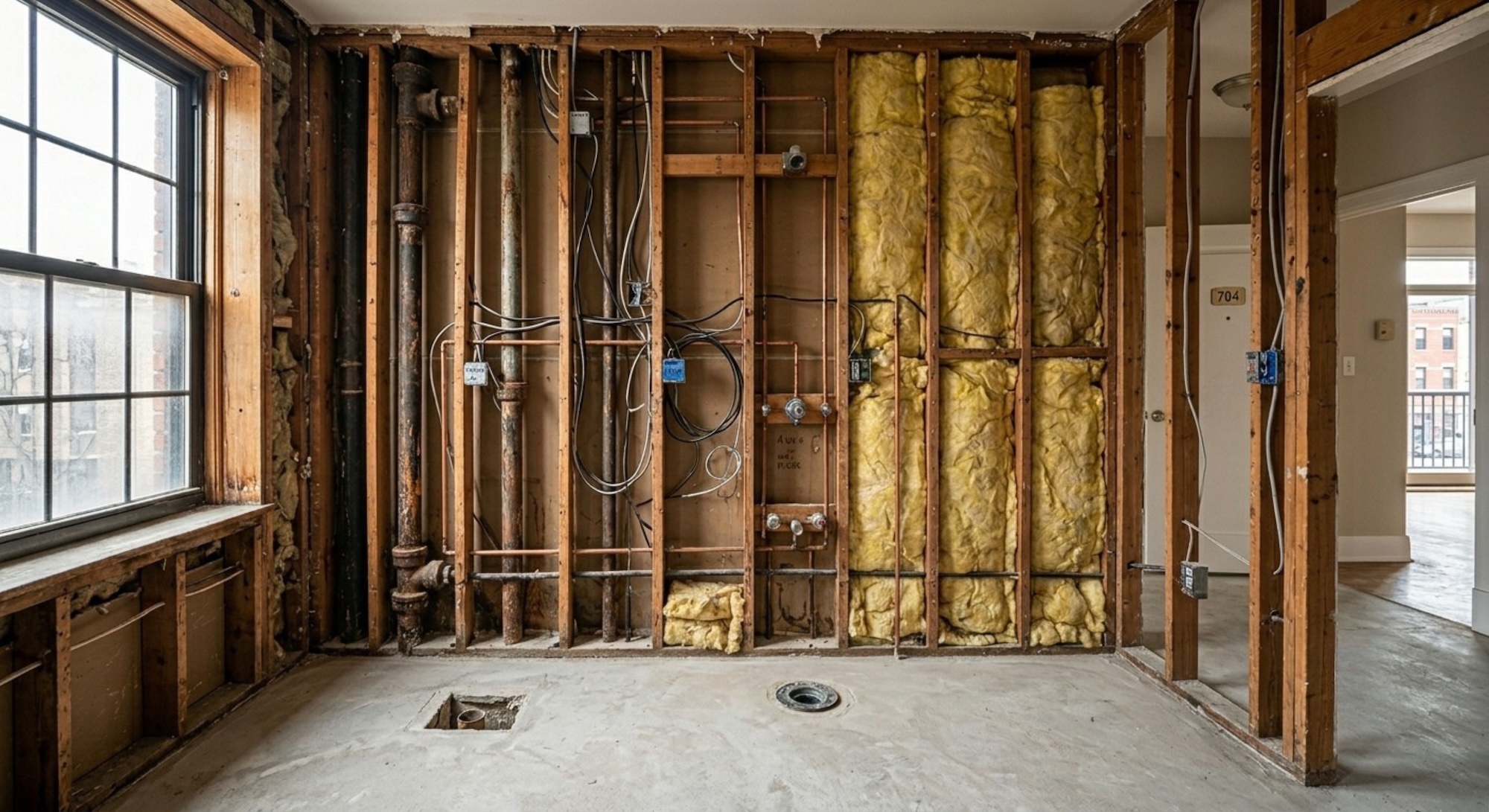
Plumbing is the most common and the most expensive thing crews find behind a Chicago bathroom wall.
Galvanized supply lines
Older Chicago homes were plumbed with galvanized steel supply pipe that corrodes from the inside over decades, choking water pressure and rusting the water. Once a wall is open, replacing those lines with modern copper or PEX is usually the right call, because closing the wall over failing pipe means tearing it open again in a few years. It is added cost, but it is the kind you only want to pay once.
Cast iron drains
The heavy cast iron drain lines in many vintage buildings and older high-rises rust and crack at the bottom where water sits. If a section is failing under your bathroom, it has to be replaced while the wall or floor is open. This is common in buildings from the early and mid 1900s, and it is far cheaper to handle during a remodel than as an emergency later.
No shutoffs and undersized lines
Plenty of older bathrooms have no local shutoff valves, no venting that meets current code, or supply lines too small for a modern shower. Bringing them up to code is often required once you pull a permit, and it is the right thing to do regardless. These are small line items individually that add up across a full bathroom.
The Structural and Moisture Surprises
Water is patient. A small leak that ran for years behind a tub or under a toilet can quietly ruin the structure underneath before anyone notices.
Rotted subfloor. Soft, spongy, or water-stained subfloor under the old flooring has to come out and be replaced before new tile goes down. Tiling over a compromised subfloor guarantees cracked tile and a failed floor.
Damaged joists. In the worst cases, a long-running leak reaches the floor joists, which means structural repair or sistering before the project can move forward. It is uncommon, but it is the surprise with the biggest price tag.
No waterproofing membrane. Older showers were often built with mud-set tile and no modern waterproofing behind them. When that comes out, the new shower is rebuilt with a proper membrane and pan, which is labor and material the old bathroom never had.
The Electrical Surprises
Bathrooms and water make electrical safety non-negotiable, and old wiring rarely meets the standard.
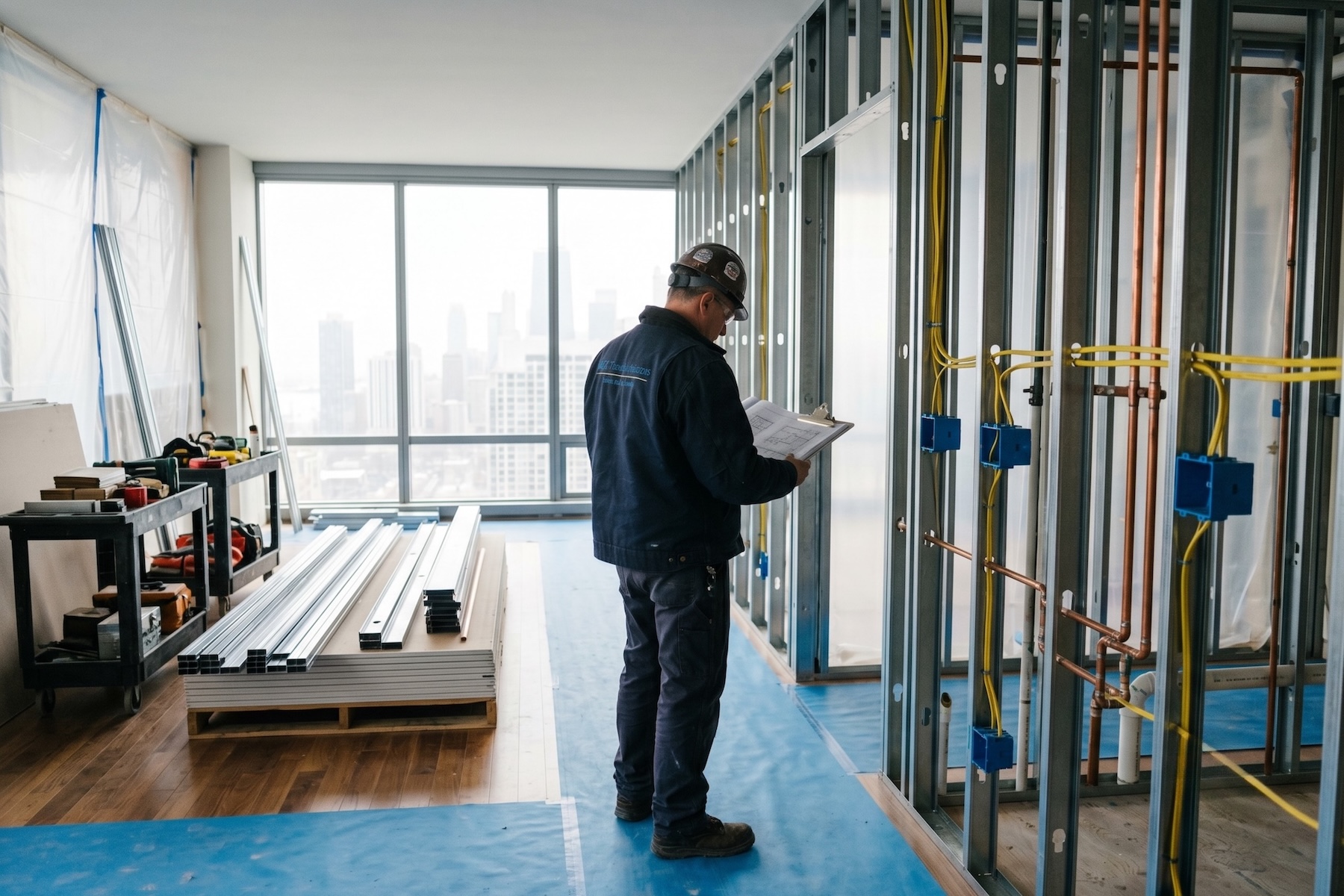
Vintage Chicago homes may still have knob-and-tube wiring, ungrounded outlets, or no GFCI protection, which is required in any modern bathroom. Once the wall is open and a permit is pulled, this work usually has to be brought current, which our Chicago building permits and codes guide explains in detail. It protects your family, and it is far easier to address while the bathroom is already torn apart. The same aging systems turn up in kitchen remodeling too, where old supply lines and wiring hide behind cabinets. A bathroom remodel is also the natural moment to add the lighting and outlets a vintage bathroom never had, which is where custom carpentry and built-ins often enter the plan.
Hidden Costs in a Condo Are a Little Different
Condo and high-rise owners face their own version of the behind-the-wall surprise. Because your bathroom ties into a plumbing stack shared with other units, a problem in that stack can surface during your remodel, and the waterproofing standard is higher because a leak becomes your downstairs neighbor's problem. If you own a unit, our condo renovation work is built around exactly these realities, and our Chicago condo bathroom remodel cost guide shows what those projects actually run.
How to Budget for What You Cannot See
You cannot predict every surprise, but you can plan so none of them derails the project. Start from a realistic baseline with our Chicago bathroom remodel cost guide, then add a contingency on top.
Set a contingency. Hold back 10 to 20 percent of your budget specifically for the unknown. On an older home, lean toward the higher end. If nothing comes up, you keep it.
Work with a contractor who investigates first. A careful remodeler inspects what is accessible, reads the age and signs of the building, and tells you honestly where the risk is before you sign. That is the difference between a realistic number and a lowball estimate that balloons.
Handle it all at once. The most expensive way to deal with old plumbing or wiring is to discover it after the bathroom is finished. While the wall is open is always the cheapest time to fix what is behind it. Owners who uncover old systems throughout the home sometimes fold the bathroom into a whole home renovation to handle everything in one pass. The same logic is why basement finishing in Chicago leans so heavily on waterproofing and code upgrades from the start.
Hidden Bathroom Remodel Cost FAQ
What hidden costs come up in a Chicago bathroom remodel?
The most common are old galvanized or cast iron plumbing that needs replacing, water-damaged subfloor or framing, and outdated wiring that no longer meets code. These are not visible until demolition, which is why a realistic budget includes a contingency for them.
Why do older Chicago homes have more surprises behind the wall?
Much of Chicago's housing was built before modern plumbing, electrical, and waterproofing standards existed. Graystones, two-flats, and bungalows have great structure but aging systems, and bathrooms are where decades of moisture do the most quiet damage.
How much should I budget for unexpected bathroom remodel costs?
Set aside 10 to 20 percent of your project budget as a contingency for hidden issues. On a vintage home, plan toward the higher end. If the walls turn out clean, the money stays in your pocket.
What is galvanized pipe and why does it need to be replaced?
Galvanized steel was a standard water supply pipe in older homes, and it corrodes from the inside over time, cutting water pressure and rusting the water. When a wall is already open, replacing it with copper or PEX is usually the smart move, because closing the wall over failing pipe means reopening it within a few years.
Do I have to replace knob-and-tube wiring during a bathroom remodel?
If your bathroom has knob-and-tube or other outdated wiring and you pull a permit, it generally has to be brought up to current code, including GFCI protection. Beyond code, it is a genuine safety upgrade in the wettest room in the house, and it is far cheaper to handle while the wall is open.
Can you find out what is behind the wall before demolition?
Partly. A careful contractor reads the building's age, checks accessible areas, and looks for warning signs like low water pressure or past leaks to flag likely issues before the project starts. No one can see through tile, but experience with Chicago's housing stock makes the estimate far more accurate.
What happens if there is water damage or rot under my bathroom floor?
Damaged subfloor is removed and replaced before any new flooring goes in, since tiling over it guarantees failure. If a long-running leak reached the joists, the structure is repaired first. It adds cost, but skipping it means a floor that fails and a much larger bill later.