

Does Winter Remodeling in Chicago Actually Change the Job?
Mostly no. Winter remodeling in Chicago changes the calendar and a handful of logistics, but it does not change the interior work that makes up the bulk of a kitchen, bathroom, or whole home project. Drywall, cabinetry, tile, plumbing, and electrical all happen inside a heated, weather-sealed home, and January has no say in any of it. What winter touches is the edges: exterior work, some material deliveries, curing and ventilation timing, and the holiday calendar.
This post is about logistics, not economics. Whether an off-season remodel saves you money, and how the Chicago market is trending, is covered in our guide on whether to remodel now or wait. Here we stick to what actually changes on the job site when it gets cold, so you can pick a start date with your eyes open.
At a Glance
Unaffected by winter: interior demolition, framing, drywall, cabinetry, tile, countertops, plumbing, and electrical.
Genuinely slower in winter: exterior masonry, foundation and concrete work, some window and material lead times, and anything that needs open windows for days.
Best move: lock a winter start in October, while crews still have open slots.
What Winter Does Not Change: The Interior Work
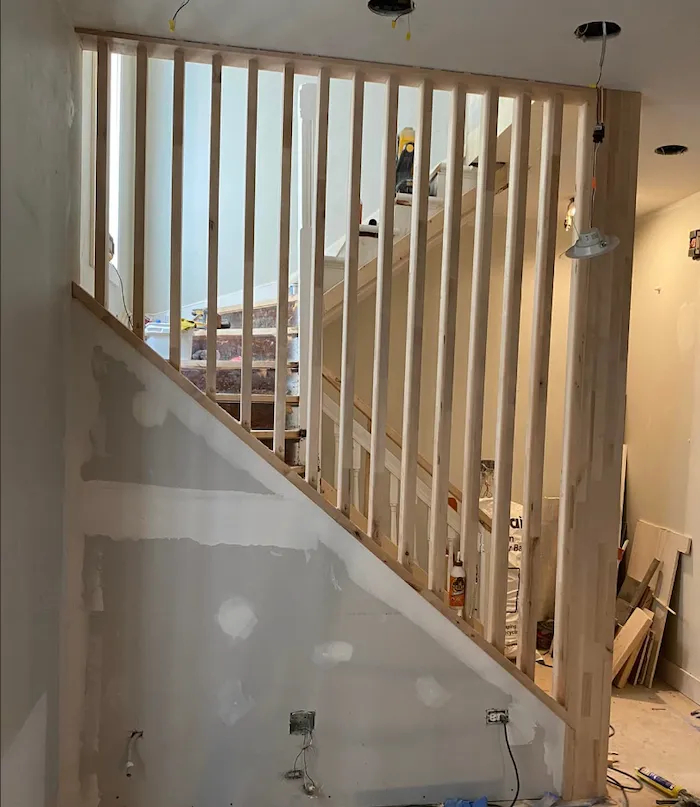
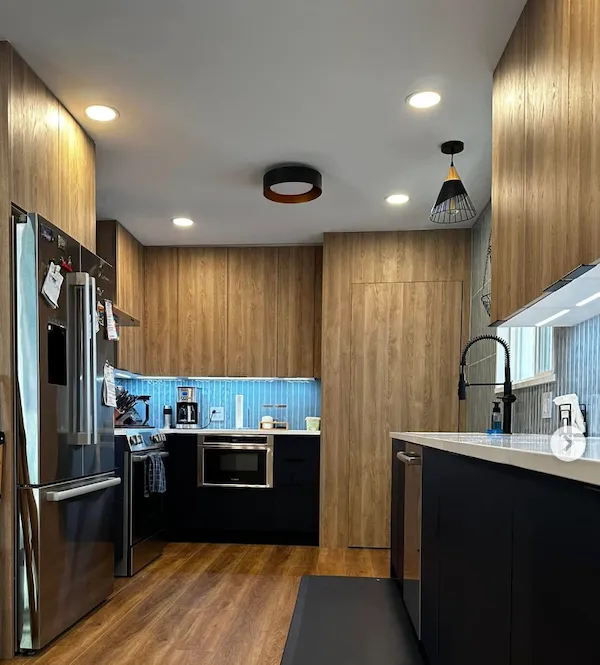
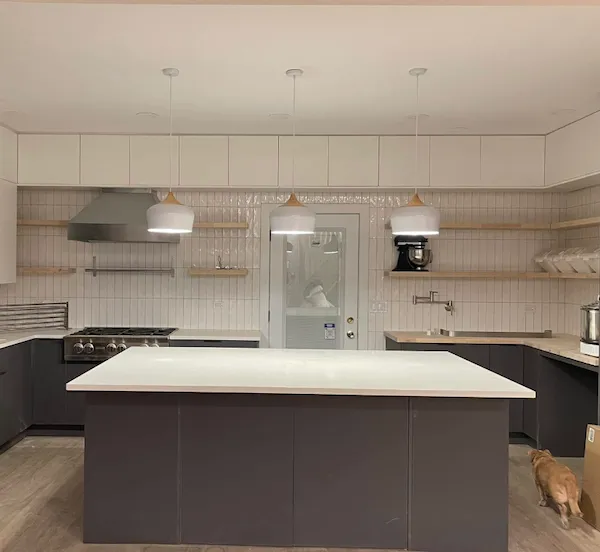
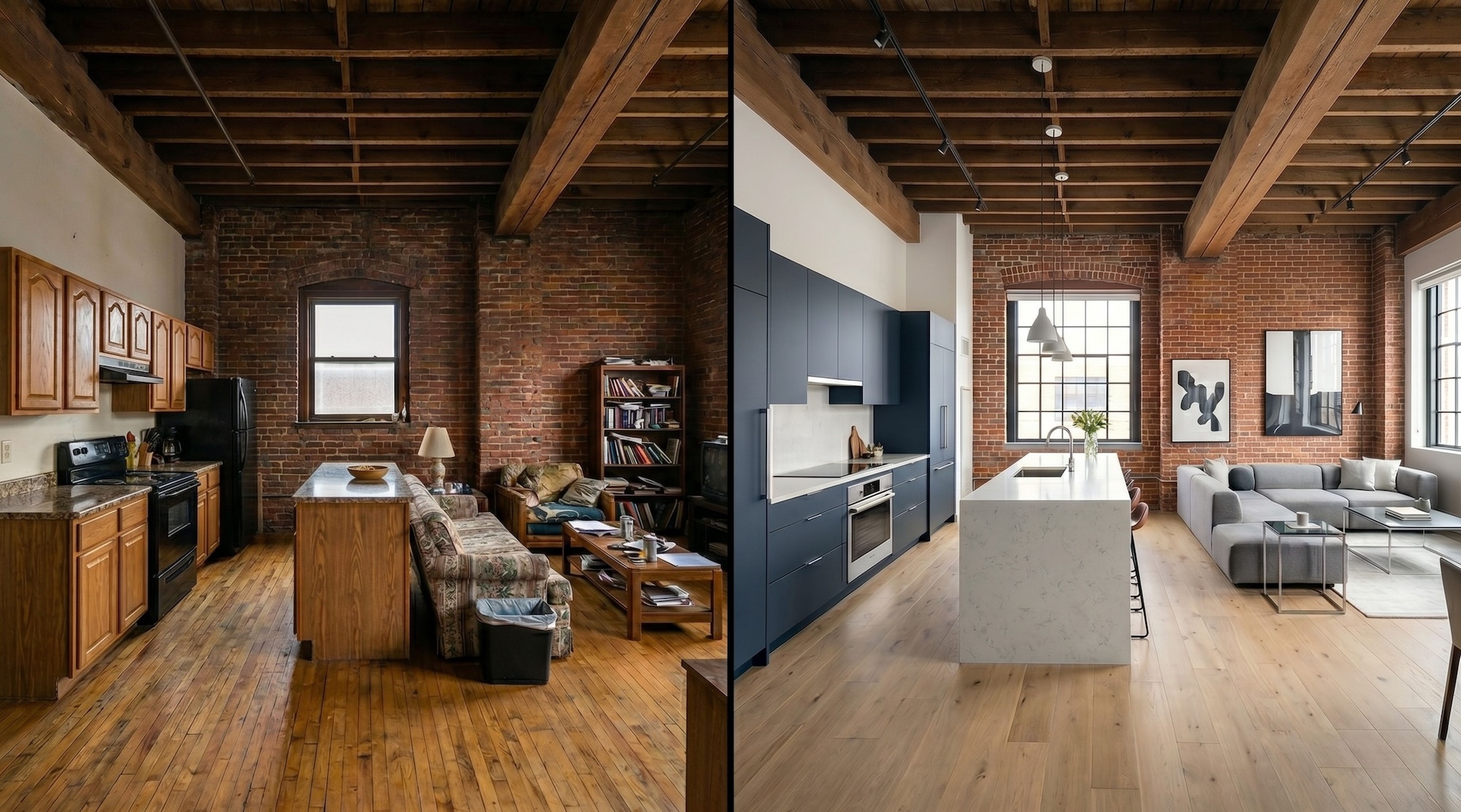
A Chicago kitchen or bathroom remodel is almost entirely indoor work. Once the home is sealed and heated, the crew works in the same conditions in February that they would in June. On a recent South Loop loft kitchen we completed, the entire project (custom cabinetry against exposed brick and timber beams, a built-in booth, a peninsula, and a dry bar) happened inside a conditioned unit. The weather outside those historic brick walls never touched the tile saw or the cabinet install.
Bathrooms are the same story. A South Loop primary and guest bathroom remodel we finished, with polished Carrara marble walls and a walk-in shower, was interior finish work start to end. So was a Wicker Park conversion of an unused bedroom into a primary suite with heated tile floors and a soaking tub. None of it depended on the season. Kitchen remodeling and bathroom remodeling are the two most winter-proof projects we do, because everything that matters happens behind a closed, heated door.
Basement finishing and custom carpentry and built-ins are just as insulated from the cold. A Lincoln Park basement we transformed from raw storage into finished space (moisture barriers, LVP, recessed lighting, a full bathroom addition) sits below grade, where ground temperature is steadier than the air above it. Built-ins like the floor-to-ceiling maple shelving we installed flanking a 1920s Bucktown fireplace are shop-built and installed indoors. Winter never enters the equation.
What Actually Slows Down in a Chicago Winter
The honest list of what cold weather affects is short, and most of it lives outside the building envelope.
Exterior, masonry, and concrete work
This is the real constraint. Concrete and masonry do not cure properly in the cold. The American Concrete Institute’s Guide to Cold Weather Concreting (ACI 306R-16) defines cold weather as a stretch when the average daily air temperature falls below 40°F, and it calls for protective steps like heating and insulated blankets for work to proceed. Chicago spends much of December through February under that line. If your project includes tuckpointing, a new exterior stair, a foundation repair, or brickwork, those pieces get scheduled around the weather or protected at added cost.
Exterior paint has a similar ceiling. Coating manufacturers set a minimum application temperature for exterior products, so repainting siding or trim usually waits for spring. These are exterior tasks, though, and they rarely sit on the critical path of an interior kitchen or bathroom remodel.
Deliveries and lead times
A hard winter storm can push a freight delivery back a day or two, and that is worth building a little slack around. It is a scheduling nuisance, not a project killer. We order long-lead items like cabinetry and windows early no matter the season, so a January start is planned around real delivery dates rather than guesses.
Curing, drying, and ventilation
A few interior tasks do care about temperature and humidity. Paint, self-leveling underlayment, thinset, and grout all cure on a schedule that assumes a warm, ventilated room. In summer you crack a window; in January you hold the heat steady and use fans and controlled ventilation instead. It is a minor adjustment a Chicago crew makes without thinking. Where it matters more is a project like a Logan Square conversion we did, turning a third-floor patio into conditioned living space. Building the envelope itself (structural reinforcement, new windows, weatherproofing) is genuinely weather-sensitive in a way a sealed interior remodel is not.
Why Condo and High-Rise Work Is Nearly Winter-Proof
Here is an edge no suburban remodeler can claim: Chicago condo and high-rise work is almost completely insulated from winter. A unit on the twelfth floor of a River North or Streeterville tower sits inside a heated, sealed building with no exterior exposure at all. No roof to protect, no foundation, no siding. The work is pure interior finish.
For a condo renovation, the winter variables are about the building, not the weather. Freight elevator scheduling, board-approved work hours, and protecting common hallways matter every month of the year, and we break those down in our Chicago condo remodeling guide. The upside is real: a condo owner can start a remodel in the dead of winter with essentially no weather risk, which is exactly why winter is a smart slot for condo projects.
The Holiday Calendar Is the Real Winter Variable
The bigger winter factor is not temperature, it is the calendar. Late November through early January carries Thanksgiving, the December holidays, and New Year’s, and that shortens working weeks. Suppliers, inspectors, and subcontractors all take time off. A sound plan accounts for a slower two to three weeks around the holidays instead of pretending the calendar is full.
Plenty of homeowners also want their kitchen back before hosting, or they simply do not want a crew in the house over the holidays. Both are fair. The fix is a start date chosen with the holidays in mind: begin in early November to wrap before hosting season, or start in January to run a clean, uninterrupted stretch through late winter.
Book the Winter Slot in October
If you want a winter start, the time to lock it in is October. This is the strongest practical reason to think about winter now. Chicago’s remodeling calendar runs busiest from spring through fall, and the best crews and trade partners fill those months first. Winter carries more open capacity, which means better scheduling and the full attention of a crew that is not split across three summer jobs at once.
Booking in fall also gives lead-time-sensitive materials room to land before demolition. Whether it is a single bathroom refresh or a whole home renovation, the projects that run smoothest in winter are the ones planned in October, ordered in November, and started with everything already on site. The best month to start a remodel in Chicago is less about the weather and more about when you commit.
One Chicago Team for Every Room and Every Season
Winter is a practical window for almost any interior project, and the same crew handles the full range year round. That means kitchens and bathrooms in the cold months, finished basements, custom built-ins, and full condo and whole-home projects planned around your building and your calendar rather than the forecast. Tell us your target move-in or hosting date and we will build the schedule backward from there.
Winter Remodeling in Chicago: FAQs
Can you remodel a kitchen in winter in Chicago?
Yes. A kitchen remodel is interior work that happens inside a heated, sealed home, so winter has almost no effect on it. Demolition, cabinetry, tile, plumbing, and electrical all proceed normally. The only winter adjustments are keeping the heat steady for curing and leaving a little slack around holiday weeks.
Is it cheaper to remodel in winter?
Sometimes, but the savings tend to be modest and depend more on crew availability and the market than on the season itself. We cover remodel timing economics and current Chicago cost trends in our remodel now or wait guide. This post sticks to logistics rather than price.
How cold is too cold for construction?
For interior work, it is essentially never too cold once the home is heated. For exterior concrete and masonry, the American Concrete Institute treats an average daily temperature below 40°F as cold weather that requires protective measures (ACI 306R-16). That is why foundation, masonry, and exterior painting get scheduled around the weather while interior remodeling keeps moving.
What is the best month to start a remodel in Chicago?
For a winter start, commit in October. Fall booking secures better crew availability and gives long-lead materials time to arrive before demolition. The best month to start a remodel in Chicago has more to do with scheduling and lead times than with the outdoor temperature.
Do Chicago winters delay remodeling timelines?
Rarely for interior projects. The main winter timeline factors are holiday-shortened weeks in late December and the occasional storm-related delivery delay, both easy to plan around. Exterior components are the exception and get scheduled separately.
Is winter a good time for a condo remodel?
Yes, winter is one of the best times for a condo remodel. High-rise and condo work is interior finish work inside a heated, sealed building with no exterior exposure, so weather risk is minimal. The real constraints, freight elevator scheduling and board-approved work hours, apply year round.