

How Do You Save Money on a Remodel in Chicago?
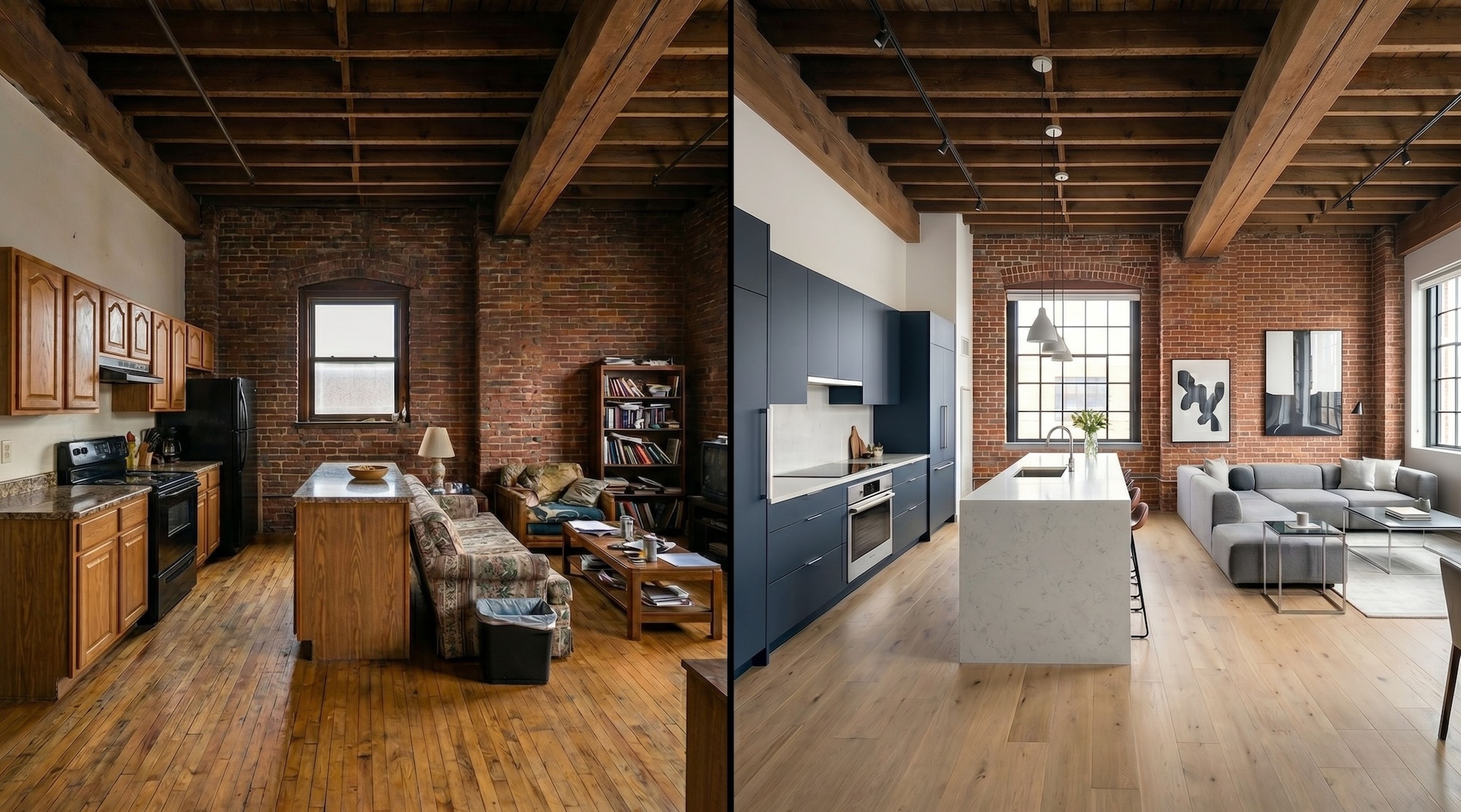
The biggest savings in a Chicago remodel come from decisions, not discounts: keep the existing layout, bundle related work into one project, and stay flexible on materials. Those three moves routinely save more than any coupon-clipping ever will, and none of them shows up in the finished photos.
Just as important is knowing what never to cut. Waterproofing, permits, and licensed trades are where false savings turn into the most expensive problems in the house. This guide covers both sides, drawn from how real Chicago projects actually spend and save money.
At a Glance
Biggest lever: keeping plumbing and walls where they are. Relocating fixtures is what turns a refresh budget into a gut budget.
Second biggest: bundling related work into one timeline, so you pay for demolition, protection, and inspections once instead of twice.
Stay flexible on: finishes and fixtures, where near-identical options can carry very different prices.
Never cut: waterproofing, permits, licensed plumbing and electrical, or your contingency. These are not costs, they are insurance.
Keep the Layout, Move the Budget
Nothing inflates a remodel like moving plumbing. The moment a toilet, tub, or sink changes location, you are paying for new rough-in, possibly new venting, floor and wall surgery, and extra inspection scope. Keeping fixtures where they are frees that money for the things you actually see and touch every day.
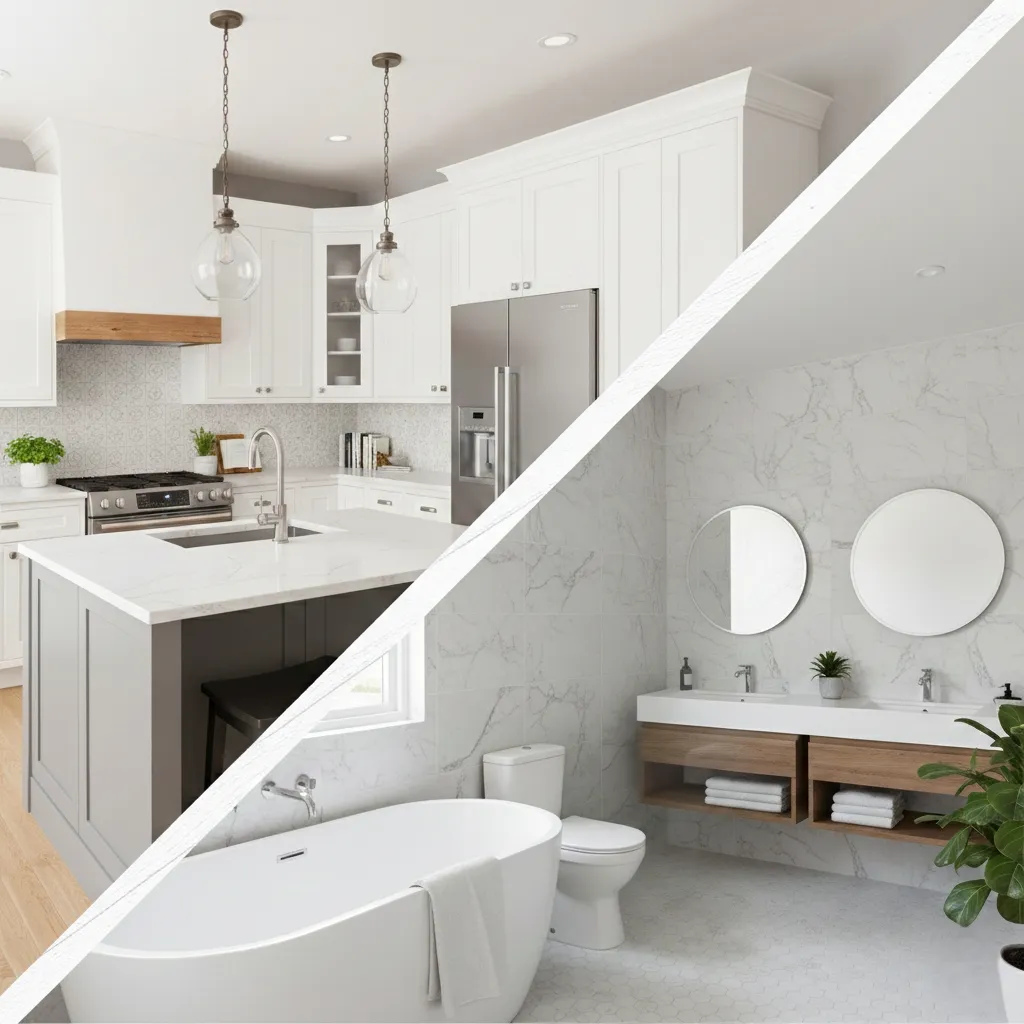
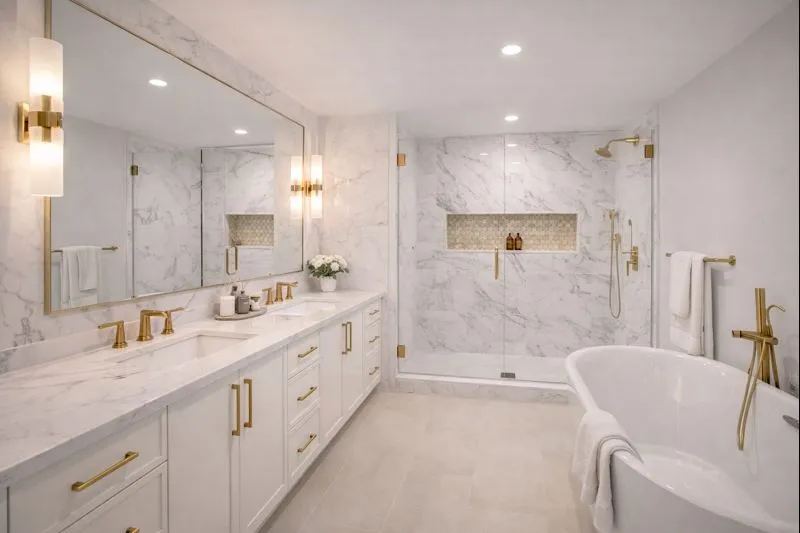
This is not a compromise strategy, it is how some of the best-looking projects get built. On a South Loop townhome bathroom we remodeled, the layout stayed exactly where it was, and the entire investment went into vertical wood-look tile, green herringbone in the shower, a floating vanity with arched mirrors, and upgraded fixtures. Four weeks of work, and nobody walking into that bathroom would ever guess the plumbing never moved. The same held on a South Loop condo where we remodeled two dated builder-grade bathrooms: both layouts stayed put, and the budget bought Carrara marble, a custom glass shower enclosure, and Kohler brass fixtures instead of pipe relocation.
The honest caveat: if your current layout genuinely fails you, fix it. Living with a bad floor plan to save money is its own kind of expensive. But moving plumbing because the new layout looks fresher in a rendering is the most common budget mistake we see in bathroom remodeling and kitchen remodeling alike.
Bundle Work Into One Timeline
Every project carries fixed costs that have nothing to do with square footage: mobilization, floor and dust protection, demolition setup, debris hauling, permit and inspection cycles. Do two projects separately and you pay those costs twice. Do them together and you pay once.
That South Loop condo is the proof. The owners had a 120-square-foot primary bathroom and a 60-square-foot guest bath, both early-2000s beige. Remodeling them as one coordinated project meant one crew, one protection setup, one materials delivery, and one six-week timeline instead of two separate disruptions months apart. The per-bathroom cost came in meaningfully below what two standalone projects would have run, and the household only lived through construction once.
The same logic scales up. Owners who know they will eventually touch the kitchen, the bathrooms, and the floors often come out ahead folding it into a single whole home renovation, and it is why pairing basement finishing with other work makes sense when the trades are already on site.
Where Flexibility Saves Real Money
Finishes and fixtures
Tile, lighting, hardware, and plumbing fixtures span enormous price ranges for products that perform identically. A porcelain tile that captures the look you want can cost a fraction of the imported version on your inspiration board, and in-stock material beats special order on both price and schedule. Semi-custom often hits the sweet spot: the guest bath in that South Loop project used a quality semi-custom vanity rather than full custom millwork, and saved the custom budget for where it showed.
Where the custom money should go
Save custom work for the spots where stock genuinely cannot fit or perform: the awkward alcove, the wall that needs storage to earn its keep, the vintage trim that has to be matched. That is where custom carpentry and built-ins return their cost, instead of being spent on a box a catalog could have supplied.
Timing
Contractor schedules in Chicago breathe with the seasons, and interior work like bathrooms, kitchens, and basements runs all winter. Owners with flexible start dates are easier to schedule, and easier to schedule is worth real money. Our guide to whether to remodel now or wait covers the timing question in depth.
What You Should Never Cut
Some line items look like savings and are actually liabilities with a delay on them.
Waterproofing and moisture work. Membranes, pans, and barriers are invisible the day the project finishes and decisive five years later. This is doubly true in condos, where a shower leak becomes your downstairs neighbor's ceiling, and it is the entire foundation of below-grade work.
Licensed plumbing and electrical. The trades you cannot see are the trades you should not discount-shop. Behind Chicago's walls, old galvanized lines and outdated wiring are common enough that this work deserves professionals, as our guide to hidden remodel costs lays out.
Your contingency. Holding back a cushion for what demolition reveals is not padding, it is what keeps a surprise from becoming a stalled project. In Chicago's older housing stock, plan on needing some of it.
Saving and Splurging Are Two Different Questions
This guide is about how to spend less without regret. The companion question, where the money you do spend earns the most, is its own decision, and our guide to where to splurge and where to save tackles it room by room. For baseline numbers to plan against, start with our Chicago kitchen remodel cost guide and bathroom remodel cost guide. Condo owners working within board rules and building logistics can lean on our condo renovation experience, where smart sequencing saves money the same way it does in a single-family home.
Saving Money on a Chicago Remodel FAQ
What is the single biggest way to save money on a remodel?
Keep the existing layout. Leaving plumbing, gas, and major walls where they are avoids rough-in work, structural surgery, and added inspection scope, which frees a large share of the budget for finishes you actually see. Two recent South Loop bathroom projects proved the point: layouts stayed put and the budget bought marble, glass, and quality fixtures instead.
Is it cheaper to remodel two bathrooms at once in Chicago?
Usually, yes. Bundling shares one mobilization, one protection setup, one demolition cycle, and one permit and inspection process across both rooms. A recent South Loop condo project remodeled a primary and guest bathroom in a single six-week timeline for meaningfully less than two standalone projects would have cost.
Where should I be flexible to save money?
Finishes and fixtures. Tile, lighting, hardware, and faucets span huge price ranges for similar quality and look, and in-stock materials beat special orders on price and schedule. Semi-custom cabinetry and vanities often deliver most of the custom look at a fraction of the cost.
What should I never cut from a remodel budget?
Waterproofing, permits, licensed plumbing and electrical, and your contingency. Each one is cheap relative to the failure it prevents, and all four failures cost multiples of the original line item. Cutting what is behind the wall is how a saved dollar becomes a five-figure repair.
Does remodeling in winter save money in Chicago?
It can. Interior work runs year-round, and owners with flexible start dates are easier to fit into a contractor's schedule, which carries real value. Winter is often the smart season for bathrooms, kitchens, and basements precisely because outdoor-dependent work slows down.
Can I save money by buying my own materials?
Sometimes, but be careful. Contractors often buy at trade pricing, and owner-supplied materials shift responsibility for measurement errors, damage, and delays onto you. If you want to source your own finishes, agree on it up front so warranty and scheduling responsibilities are clear before anything is ordered.