

The State of the Chicago Remodeling Market in Spring 2026
The Chicago remodeling market in spring 2026 is shaped by four shifts that all happened in the first five months of the year. Home values are up 11% year over year, mortgage rates have settled in the low 6s, the scheduled cabinet tariff hike was delayed for another year, and home equity loan rates hit 2026 lows in March. Each of those changes the math on whether to remodel now, what to spend, and how to fund it.
Here is the picture we are seeing in the field at Wood Contracting and what it means if you are planning a Chicago kitchen, bathroom, or whole home project this year.
Chicago Home Values Climbed 11% This Year, Which Changes the Equity Conversation
The April 2026 median home price in Chicago hit $400,000, up 11.1% year over year, according to housing market data tracked by Norada Real Estate. April sales jumped 21.2% over the same month last year, with 0.75 months of supply and homes selling at 100.19% of asking. That is a tight seller's market by any measure.
For homeowners thinking about remodeling, the relevant takeaway is equity. An $800,000 Lincoln Park graystone that was worth $720,000 a year ago carries roughly $80,000 of fresh equity, and most of that becomes usable when you tap a HELOC or home equity loan. Combine that with a market where trading up is harder than it has been in years, and the calculus tilts toward investing in the home you already own.
On a Logan Square home we worked on, the owners had an unused third-floor patio that sat empty eight months a year. Rather than selling and trying to find more square footage in this market, they had us convert that 250-square-foot patio into year-round interior space with HVAC, weatherproofing, and windows that match the rest of the third-floor unit. That kind of structural creativity is what we are seeing more of in 2026 as homeowners decide to maximize what they have.
Mortgage Rates Have Stabilized Near 6.3%, and Big Drops Are Not Coming Soon
The average 30-year fixed mortgage rate sits around 6.3 to 6.4% as of mid-May 2026. Fannie Mae's May 2026 Housing Forecast expects the rate to hold at 6.3% through the first quarter of 2027 before edging down to 6.2% for the rest of next year. That is meaningfully higher than the post-pandemic lows and only slightly better than the rates in early spring.
What this means for Chicago homeowners is that the wait-for-rates-to-drop play is increasingly unattractive. The cost of trading into a larger home is going to look similar in 12 months. Buying a $1.1 million home in a desirable neighborhood at 6.3% costs roughly $5,900 a month in principal and interest before taxes and insurance. By contrast, a $75,000 kitchen remodeling project financed on a home equity loan at today's rates costs about $670 a month over 15 years. The remodel is not free, but it is on a different order of magnitude from the move.
Stable rates also make project budgeting easier. The interest rate environment is consistent enough that homeowners can plan a six-month design and construction timeline without the financing math changing underneath them.
The 2026 Cabinet Tariff Hike Was Delayed, But Cabinets Still Cost More Than Mid-2025
The cabinet tariff situation is the single biggest variable in current Chicago kitchen budgets. A tariff increase from 25% to 50% on imported cabinets was scheduled for January 1, 2026, but the White House delayed the increase for a full year, keeping cabinets at the 25% level through at least January 2027. That delay matters, because the 50% rate would have added roughly $3,000 to $6,000 to a typical kitchen of cabinets.
Even with the delay, cabinets cost meaningfully more than they did 18 months ago. A cabinet package quoted at $12,000 in mid-2025 is now running $15,000 to $18,000 in 2026, according to recent cabinet tariff analysis from Neil Kelly. NAHB data reported by PBS News shows more than 60% of builders are reporting higher costs directly attributable to tariffs.
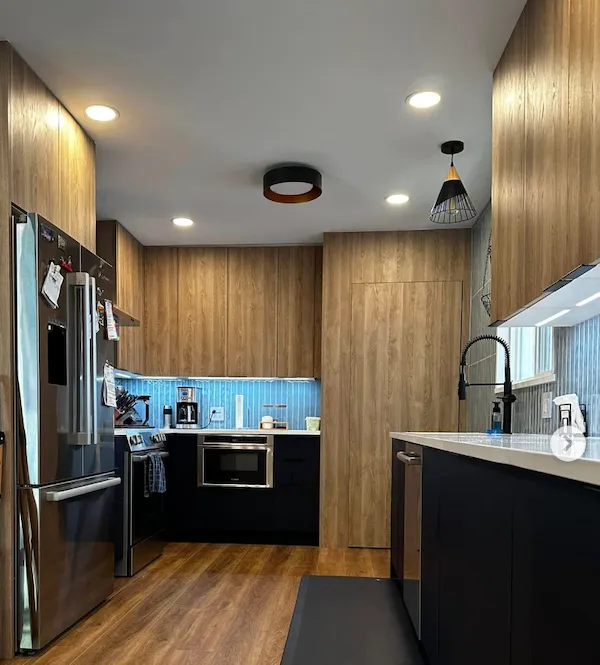
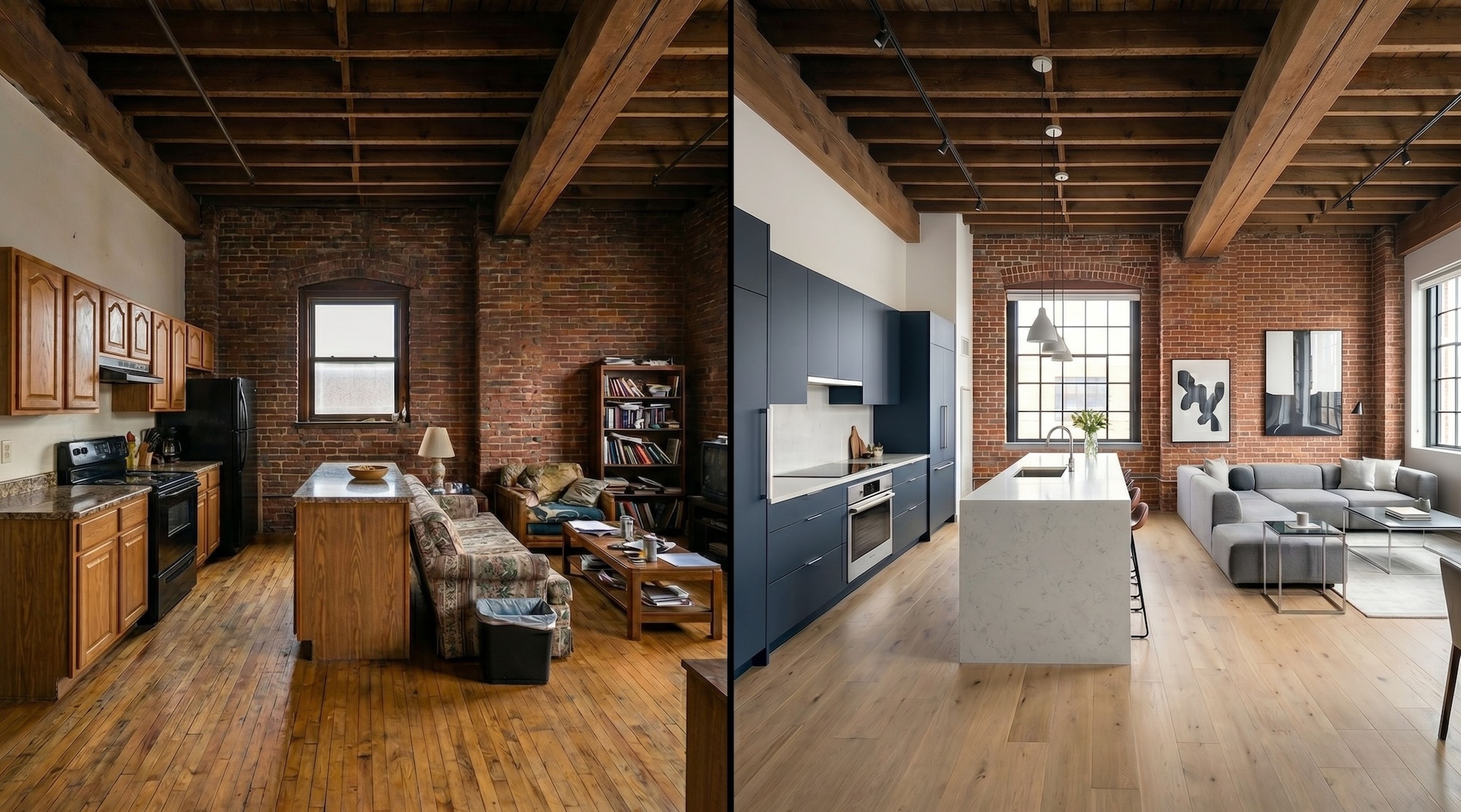
For a Chicago kitchen, that pushes the cabinetry line item to about 30 to 40% of the total budget rather than the 25 to 35% range we used to see. On a recent South Loop loft kitchen, we worked with the designer to specify a mix of domestic semi-custom cabinetry and select imported pieces for visible runs, which kept the total cabinet investment closer to the original mid-2025 quote without compromising the design. That kind of strategic sourcing is the new normal for kitchen projects this year.
The practical takeaway is that the cabinet tariff cliff was deferred, not eliminated. Homeowners planning a kitchen this year have a full design and order window before the next decision point, but they should lock in cabinet pricing as early in the project as possible.
HELOC Rates Hit 2026 Lows in March, Which Pairs Well With Rising Home Values
The May 6, 2026 Bankrate HELOC rate survey puts the national average HELOC rate at 7.26%, and the home equity loan average sits at 7.36%, matching the 2026 low first hit in March. Those are not 2020 rates, but they are the lowest the home equity market has been all year, and the spread between equity financing and a cash-out refinance widened in favor of equity products.
What this means in practical Chicago terms: a homeowner with $150,000 of available equity who borrows $75,000 against it for a bathroom remodeling project and basement finishing work pays roughly $700 a month for 15 years rather than refinancing the entire mortgage at a worse rate. With Chicago home values up 11%, the equity to draw against is also growing.
Most of the homeowners we worked with in March and April 2026 used a HELOC or home equity loan rather than savings alone to fund mid-range projects. That tracks with the Houzz 2026 U.S. Renovation Plans Report finding that 34% of homeowners are using credit cards as a secondary source, up 5 percentage points year over year, signaling that liquid savings alone are not covering today's project costs.
What Chicago Homeowners Are Actually Spending in 2026
The Houzz 2026 study reports that 50% of U.S. homeowners plan to renovate this year, with a median planned spend of $15,000. The 90th percentile climbed to $150,000, up 7% from 2024. Median kitchen budgets sit at $24,000, and median primary bathroom budgets at $15,000.
The Chicago numbers run higher than the national median because of building type, labor cost, and the local cost of materials. Based on the projects we are quoting in spring 2026, here is the range we typically see in Chicago neighborhoods like West Loop, Wicker Park, Bucktown, and Lincoln Park.
Typical Chicago Project Budgets, Spring 2026
A cosmetic kitchen refresh with new countertops, backsplash, painted cabinets, and updated lighting runs $15,000 to $22,000. A mid-range kitchen remodel with new cabinetry, quartz countertops, full tile, and appliance integration runs $22,000 to $50,000. A complete kitchen transformation with layout changes, premium materials, and custom cabinetry runs $50,000 to $80,000 or more.
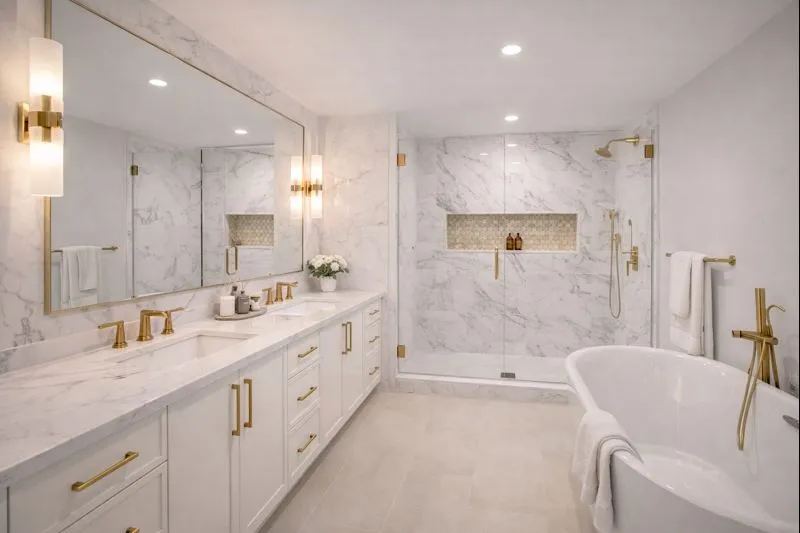
For bathrooms, a powder room or half bath refresh runs $12,000 to $20,000. A mid-range full bathroom with custom tile, a new vanity, and modern fixtures runs $20,000 to $32,000. A luxury primary bathroom with heated floors, premium tile, and a custom shower runs $32,000 to $55,000 or more.
Whole home projects, including condo renovation and whole home renovation work, typically run $50,000 to $200,000 or more in Chicago depending on scope and finish level. Custom carpentry and built-ins projects, like the fireplace built-ins we recently completed in a Bucktown home, run $3,000 to $20,000 or more depending on the room and the wood species.
The Houzz study also found that 37% of homeowners exceeded their initial budget in 2025, with 35% consciously upgrading materials mid-project and 31% expanding scope. The lesson for 2026 is to build a real contingency line item (10 to 15% of project cost) into the budget rather than treating the contractor estimate as the ceiling.
Why Homeowners Are Choosing to Remodel Instead of Move
The Chicago seller's market is part of the story. With 0.75 months of supply, finding a better property in a desirable neighborhood is harder than it has been in a decade. The 21.2% year-over-year jump in April closings means buyers are out there in volume, but the inventory to match them is not. For a Lincoln Park or Gold Coast homeowner thinking about trading up to a larger primary bathroom or a more open kitchen, the practical alternative is to renovate rather than spend six months house-hunting in a market where homes are selling above asking.
On a Wicker Park project last year, the homeowners had a five-bedroom layout where the fifth bedroom sat mostly empty. Rather than trying to sell and find a new home with a better primary suite, they had us convert that unused bedroom into a luxury primary bathroom with a walk-in shower, soaking tub, and heated floors. The conversion added the primary suite they were chasing in the market, without the friction of buying and selling at the same time.
The 2025 Cost vs. Value Report from Zonda and Remodeling Magazine backs this play. Minor kitchen remodels return 113% of cost nationally and roughly 115% in Midwest markets like Chicago. Mid-range bathroom remodels return 80%, which is the highest reading since 2007 per the Journal of Light Construction's analysis of the 2025 report. At those return rates, a well-scoped remodel is essentially a wash at resale while delivering years of daily use in the meantime.
What to Do Right Now if You Are Planning a Chicago Remodel in 2026
If you are planning to start a Chicago remodel this year, three things matter more than they did in 2024 or 2025.
First, lock in cabinet pricing early. The 50% tariff has been delayed but not removed, and the next decision point is January 2027. If your project is starting in the second half of 2026, order cabinets as soon as the design is approved rather than waiting until the typical mid-project ordering window.
Second, get pre-approved for financing before signing a contract. HELOC and home equity loan rates can move daily, and the application timeline is two to four weeks. With Chicago equity values up 11%, most homeowners qualify for more than they did a year ago, but the underwriting still takes time.
Third, build a real contingency budget. Chicago vintage buildings reliably reveal surprises behind plaster: old plumbing, undersized electrical, structural concerns common in pre-war buildings. The 2025 Cost vs. Value data is built on clean projects with no surprises. The reality of an Old Town graystone or a Streeterville high-rise condo almost always includes some scope discovery once the walls open.
Frequently Asked Questions About the Chicago Remodeling Market in 2026
Is now a good time to start a Chicago kitchen or bathroom remodel?
Yes for most homeowners with equity or savings to fund the project. Material costs are elevated but stable through the rest of 2026, mortgage rates have settled near 6.3%, and HELOC rates hit 2026 lows in March. Waiting for materially better conditions in the next 12 months is unlikely to pay off based on current Fannie Mae and Bankrate forecasts.
How much have Chicago kitchen remodel costs gone up because of tariffs?
A typical Chicago kitchen remodel costs about 10 to 20% more than it did in mid-2025, depending on the cabinet package. The biggest single driver is imported cabinetry, which is running 25% above pre-tariff pricing. A kitchen quoted at $35,000 in mid-2025 is closer to $40,000 to $42,000 today.
Will mortgage rates drop in 2026 and change the remodel-versus-move math?
Probably not significantly. Fannie Mae's May 2026 forecast expects 30-year fixed rates to stay at 6.3% through the first quarter of 2027 and edge down to 6.2% later in the year. That is not the kind of drop that makes trading up more attractive than staying and remodeling.
Are Chicago home values still going up in 2026?
Yes. April 2026 median home values in Chicago were up 11.1% year over year, with 0.75 months of supply and homes selling at 100.19% of asking. Forecasts call for slower 2 to 5% growth over the rest of the year, but the trajectory is still up.
Should I use a HELOC, a home equity loan, or a cash-out refinance to fund my remodel?
For most Chicago homeowners with an existing mortgage in the 3 to 4% range, a HELOC or home equity loan is the better option in 2026 because refinancing the full mortgage at 6.3% loses the low-rate baseline. HELOC rates near 7.26% and home equity loan rates near 7.36% (both at 2026 lows) are the right tools for a $30,000 to $150,000 project.
How do tariffs affect bathroom remodels in Chicago, not just kitchens?
Bathroom budgets are less exposed than kitchens because the biggest tariff impact is imported cabinetry. Vanities are typically a smaller line item than kitchen cabinetry, and tile, plumbing fixtures, and most fittings are sourced more flexibly. Expect a bathroom remodel to cost 5 to 10% more than mid-2025 pricing, rather than the 15 to 25% increase common on full kitchens.
What is the best ROI Chicago remodel I can do in 2026?
Mid-range bathroom remodels are returning 80% at resale, the highest reading since 2007 according to the 2025 Cost vs. Value Report. Minor kitchen remodels return roughly 115% in Midwest markets. Both significantly outperform luxury upscale remodels, which typically return 50 to 60% of cost in resale value.