

What Do You Need to Decide Before Starting a Kitchen Remodel?
A kitchen remodel involves hundreds of decisions. The big ones (cabinets, countertops, appliances) get all the attention. But it is the smaller ones, like grout color, outlet plate finishes, and the swing direction of your fridge door, that catch homeowners off guard mid-project. Missed decisions cause delays, change orders, and frustration that could have been avoided with a simple checklist.
We built our Kitchen Remodel Checklist from over 500 Chicago projects, years of conversations with homeowners who wished someone had handed them a planning tool on day one. This guide walks through the eight categories of decisions every Chicago homeowner should work through before demo day, and explains why each one matters.
What Should You Prepare Before Meeting With Your Contractor?
The best first conversations happen when you have done a little homework. Not research papers or spreadsheets, just honest answers to a few questions about how you live. What do you love about your current kitchen? What drives you crazy? What are your top three must-haves, and what is your realistic budget range?
Think about timeline and lifestyle, too. How long can you realistically live without a kitchen? Are you planning to stay long-term or sell within a few years? Has everyone in your household weighed in? These answers shape everything from material choices to layout priorities. Getting aligned before your first meeting means your contractor can focus on solutions instead of sorting through conflicting goals.
It also helps to understand who handles what. Your contractor manages permits, demolition, construction, plumbing, electrical, HVAC, inspections, and the final walkthrough. You handle selecting finishes, choosing and ordering appliances, picking cabinet hardware, approving design selections, and being available for key decisions. Knowing the division of labor upfront prevents confusion later.
How Do You Choose the Right Kitchen Layout for How You Live?
Layout decisions shape everything that comes after. Are you keeping the existing footprint or removing walls? Will you add or change an island? Is there room for a peninsula or banquette? These structural questions need answers before anyone starts picking tile colors.
Think in terms of work zones: prep (counter space near the sink), cook (range, hood, spice storage), clean (sink, dishwasher, trash), and storage (pantry, dishes, dry goods). Walk through a typical morning. Where do you trip over yourself? Where do two people collide? That is the problem your new layout needs to solve first.
Lifestyle questions matter just as much. Do you cook from scratch regularly? Do you entertain? Are there kids doing homework at the counter? Do you need accessibility features? Are you a right-handed or left-handed primary cook? These details influence everything from where the dishwasher goes to how much counter space you need on each side of the range. In Chicago condos, especially in neighborhoods like Gold Coast and Streeterville high-rises, layout constraints are tighter and every square foot counts.
When Should You Finalize Cabinet and Storage Decisions?
Cabinets are the face of your kitchen and the longest thing to arrive. Semi-custom cabinets take 8 to 12 weeks from order to delivery. That means locking in your cabinet decisions early, sometimes before permits even come back.
Style decisions include door style (flat panel, shaker, inset, raised), color or stain, whether you want two-tone uppers and lowers, cabinet height (standard or to the ceiling), open shelving sections, glass-front display cabinets, and toe-kick style. Storage features deserve equal attention: pull-out trash and recycling, spice pull-outs, drawer organizers, pots and pans drawers, lazy Susans, under-sink organization, tray dividers, pantry towers with pull-outs, appliance garages, and wine or bottle storage. Do not forget hardware. Cabinet pulls or knobs, hardware finish (matte black, brass, chrome, nickel), soft-close hinges, and soft-close drawer slides all need to be selected before installation day.
For custom carpentry and built-ins, the lead time can be even longer. Plan accordingly.
How Do You Choose Countertops, Backsplash, and Appliances?
Your countertops and backsplash are the surfaces you see and touch every day. Countertop material options include quartz (the most popular for low maintenance), natural stone like granite or marble, butcher block, concrete, and solid surface. You will also need to choose your slab color and pattern, edge profile, whether you want a waterfall edge on the island, counter overhang for seating, and approve seam locations.
Backsplash decisions include tile material, shape (subway, hex, mosaic, large format), size and color, backsplash height, grout color, grout type (sanded, unsanded, or epoxy), and Schluter or trim profiles. Your sink type (undermount, drop-in, or farmhouse) and material (stainless, granite composite, or fireclay) also get locked in during this phase.
Appliances are where most people get the order backwards. Choose appliances first, then finalize cabinets, because a refrigerator that is one inch deeper than expected can throw off your entire cabinet run. Confirm the width, depth, and height of every appliance. Check cutout dimensions and clearances. Verify power requirements (110V or 240V), gas line sizing, water line for the ice maker, and door swing direction. Bring your appliance spec sheets to every meeting with your contractor.
What Kitchen Remodel Details Do Most Homeowners Forget?
Plumbing fixtures, lighting, flooring, and paint may not be as exciting as picking your range or countertops, but they are the decisions that stall projects when they are not made on time.
Plumbing
Your main faucet style (pull-down, pull-out, or standard), faucet finish, sprayer feature, soap dispenser, and drain assembly all need to be sourced. Extras like a pot filler, instant hot water tap, filtered water dispenser, reverse osmosis system, or a second prep faucet should be decided before rough-in, not after the walls are closed.
Lighting and Electrical
Plan recessed cans, pendant lights over the island, under-cabinet lighting, inside-cabinet lighting, toe-kick lighting, and any decorative fixtures. Choose your color temperature (warm, neutral, or cool) and plan for dimmer switches throughout. On the electrical side, Chicago code requires counter outlets every four feet with GFCI protection. Think about island outlets, dedicated circuits for the fridge, microwave, and disposal, and a 240V circuit if you are going electric for the range or oven. Even outlet plate finish (white, black, or metal) is a decision worth making intentionally.
Flooring and Paint
Flooring material (hardwood, engineered, LVP, tile, or stone), color, plank or tile size, direction of install, transitions to adjacent rooms, underlayment, heated floor system, and baseboard style all need selections. For paint, choose your wall color, trim color, ceiling color, cabinet paint color if applicable, and paint finish (matte, eggshell, satin, or semi-gloss). Test your paint on the actual wall, in the actual light, at the actual time of day you spend in the kitchen.
Final Details
These are the small things that derail timelines: cabinet hardware, outlet and switch plate covers, vent covers and registers, window treatments, range knobs, hood vent ductwork, caulk color, grout sealer, touch-up paint, and an extra box of tile for future repairs. On the finishing side, think about bar stools, pendant bulbs, trash and recycling bins, soap dispensers, dish drying rack, knife storage, and drawer liners. Buy one extra box of tile and stash a quart of touch-up paint somewhere safe. Three years from now, when something chips, you will be grateful.
How Do You Live Through a Kitchen Remodel?
Every kitchen project moves through four phases: discovery and design, selections and ordering, permits and prep, and construction. Knowing where you are in the process makes the whole thing feel less like chaos and more like progress.
During construction, set up a temporary kitchen in another room with a microwave, coffee maker, paper plates, and essentials. Even with dust containment, fine dust travels. Cover furniture in adjacent rooms and change HVAC filters more often. The good news: most clients stay home throughout the project. A good contractor works respectfully and cleans up daily.
Chicago homeowners in Lincoln Park bungalows, Wicker Park two-flats, Bucktown graystones, and South Loop condos all deal with unique challenges, from vintage plumbing to HOA approval timelines. A comprehensive checklist helps you plan for those realities before they become surprises.
Get the Free Kitchen Remodel Checklist
We put everything above (and more) into a printable, 15-page kitchen remodel checklist that covers all eight categories of decisions, a prep section to complete before your first contractor meeting, a four-phase timeline overview, and tips for living through construction. It was built from real experience on real Chicago projects, and it is yours for free. Whether you are remodeling a condo kitchen in River North or overhauling a single-family kitchen in Logan Square, this checklist will keep you organized from first meeting to final walkthrough.
Ready to start planning? Contact Wood Contracting for a free consultation. We will walk through the checklist with you, answer your questions, and help you build a plan that fits your home, your budget, and your life.
Frequently Asked Questions
What should I plan before starting a kitchen remodel in Chicago?
Start by answering lifestyle questions about how you use your kitchen, set a realistic budget with a 10 to 15 percent contingency, gather inspiration photos, and align your household on priorities. Then work through decisions by category: layout, cabinets, countertops, appliances, plumbing, lighting, flooring, and final details. Having these answers ready before your first contractor meeting saves weeks of back-and-forth.
How many decisions does a kitchen remodel involve?
A typical kitchen remodel involves well over 100 individual decisions across eight major categories. The big selections like cabinets and countertops get the most attention, but smaller choices like grout color, outlet plate finish, and disposal switch placement are the ones that stall projects when they are not made on time.
Why should I choose appliances before finalizing cabinets?
Appliance dimensions directly affect cabinet layout. A refrigerator that is one inch deeper than expected can throw off an entire run of cabinets. Confirming exact widths, depths, heights, cutout dimensions, power requirements, and door swing directions before cabinet orders prevents costly changes later.
What do Chicago condo owners need to plan differently for a kitchen remodel?
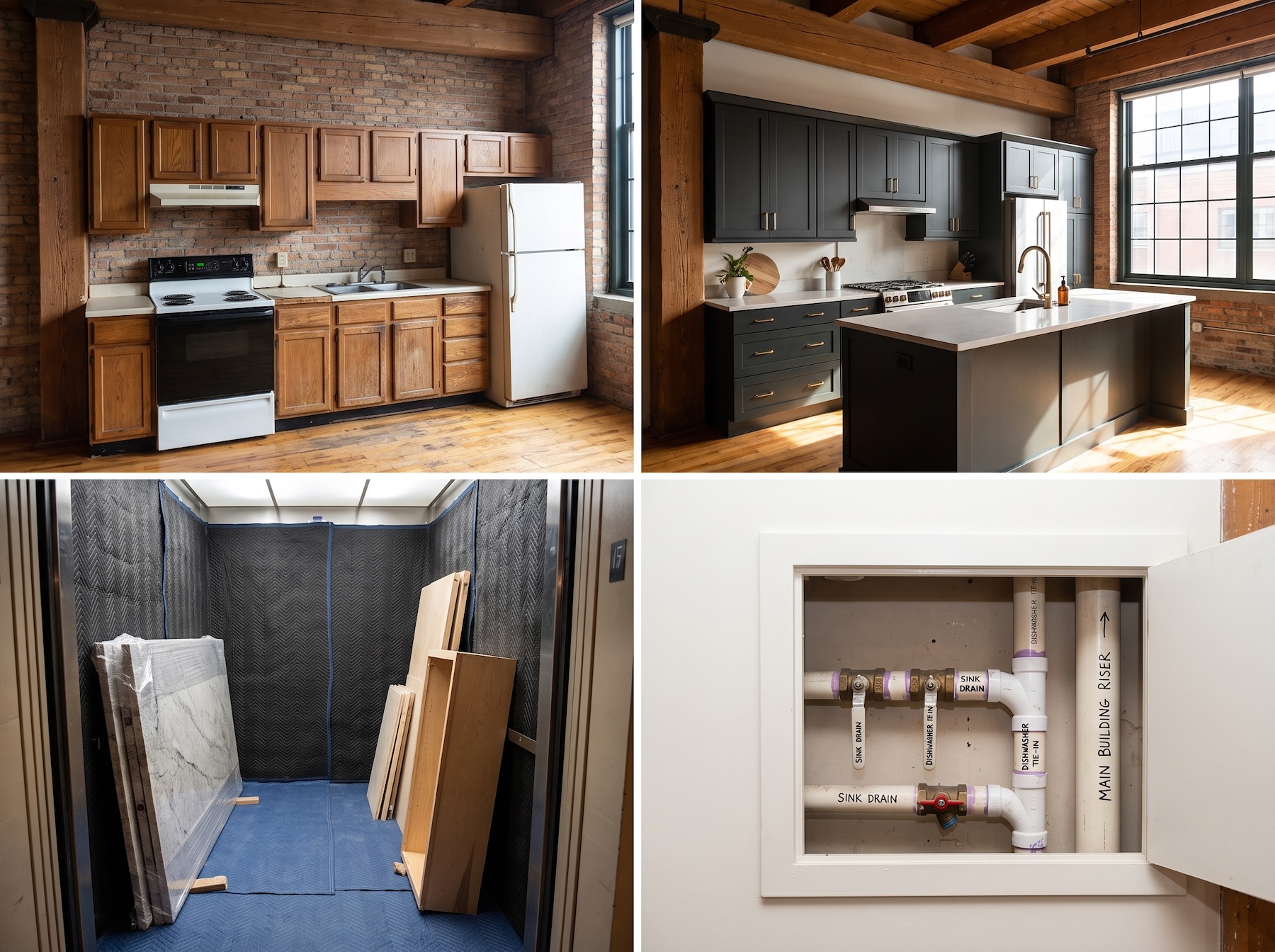
Condo renovations add HOA approval (which can take 4 to 8 weeks), restricted construction hours (typically 9am to 4pm on weekdays), freight elevator scheduling for material deliveries and debris removal, and building insurance requirements. Start the approval process as early as possible and factor the extended timeline into your plan.
How long does a kitchen remodel take in Chicago?
Most Chicago kitchen remodels take 8 to 12 weeks for construction, with an additional 6 to 12 weeks of pre-construction for design, selections, ordering, and permits. Condo projects can add 4 to 8 weeks for HOA approval. Having all your selections finalized before demo day is the single best way to keep your project on schedule.
What are the most common decisions homeowners forget during a kitchen remodel?
Outlet plate finishes, vent cover and register styles, caulk color, the swing direction of appliance doors, window treatments, pendant bulb types (they are often sold separately from the fixture), and an extra box of tile for future repairs. These small items do not show up on most plans but can hold up your punch list if they are not sourced in advance.
How do I set a realistic budget for a kitchen remodel?
Start with a total number you are comfortable spending, then work backwards. Cabinets typically account for 25 to 35 percent of the total budget, appliances 15 to 20 percent, countertops 10 to 15 percent, and labor 20 to 30 percent. Always include a 10 to 15 percent contingency for surprises, especially in older Chicago homes where issues behind walls are common.
Can I live in my home during a kitchen remodel?
Yes. Most homeowners stay home throughout a kitchen remodel. Set up a temporary kitchen in another room with a microwave, coffee maker, paper plates, and a few essentials. Expect dust, noise, and limited access during the construction phase. A good contractor contains dust daily and keeps common areas clean.