
Should You Reface or Replace Your Kitchen Cabinets in Chicago?
Kitchen cabinet refacing in Chicago is the right call when three things line up: the cabinet boxes are structurally sound, the existing layout already works for how you cook, and your main goal is a fresh look without a full remodel budget. If the boxes are failing, the layout fights you every day, or you want a specific built-to-fit look, replacement or new custom cabinets is the better investment. Refacing keeps your existing boxes and swaps the doors, drawer fronts, and visible veneer. It is a cosmetic upgrade, not a structural one, and being honest about that difference is what saves people money.
Here is the plain version. Refacing is a legitimate option that can transform a dated kitchen for a fraction of a gut remodel. It is also oversold constantly, because the margin is good and the pitch is easy. This guide gives you the criteria to decide for yourself, the cost picture as of 2026, and a clear line on what refacing simply cannot fix.
At a Glance
Reface when the boxes are solid, the layout works, and you want a faster, lower-cost refresh.
Replace or go custom when the boxes are water-damaged or swollen, you want to change the layout, or you need storage built for an odd Chicago footprint.
Cost reality: refacing usually costs less than full replacement, but a high-end solid-wood reface can land in the same range as mid-grade new cabinets.
The Honest Reface-or-Replace Test
Three questions settle most kitchens. Answer them before anyone gives you a quote.
Are the cabinet boxes actually sound?
This is the question that matters most, and it is the one refacing salespeople tend to skip. Open a door and look at the box itself: the sides, the shelves, the back panel. Solid plywood or solid wood boxes in good shape are excellent candidates for refacing. Particleboard or MDF boxes that have swelled, delaminated, or gone soft near the sink or dishwasher are not. You cannot put a beautiful new door on a box that is quietly falling apart behind it. In older Chicago condos and two-flats, a slow supply-line drip under the sink has often been working on the base cabinet for years before anyone notices.
Does the layout already work?
Refacing changes how your kitchen looks, not how it functions. If your current cabinet configuration frustrates you, refacing locks that frustration in behind a prettier face. A cramped galley, a missing pantry, a wasted corner, an island you wish you had: none of that changes with new doors. If the layout is genuinely good and you just cannot stand the honey-oak finish, refacing is a strong fit.
What is the goal, and what is the budget?
If the goal is a cleaner, updated look and the budget is tight, refacing earns its place. If you are already planning to move plumbing, change the footprint, or invest in the kitchen as a long-term upgrade, the math often tips toward new cabinetry, because you are opening things up anyway.
Refacing vs. Replacement vs. Custom: The Cost Picture
National figures are useful for orientation, not for quoting a Chicago kitchen, so treat these as context. According to Angi's 2026 cost guide, refacing kitchen cabinets averages about $7,235 nationally, with most projects landing between $4,237 and $10,233. HomeGuide's 2026 data puts refacing at roughly $5,000 to $13,000 for an average kitchen and full cabinet replacement at about $4,500 to $15,000, with simple refinishing (sanding and repainting existing doors) as low as $1,500 to $4,500.
Notice what that overlap tells you. A high-end reface and a mid-range replacement can cost nearly the same. That is the moment to stop and think, because at that price you are choosing between a new face on old boxes and genuinely new cabinets. Custom cabinetry sits above both: it costs more up front, but it is built to your exact dimensions, your storage needs, and materials chosen to survive a Chicago kitchen.
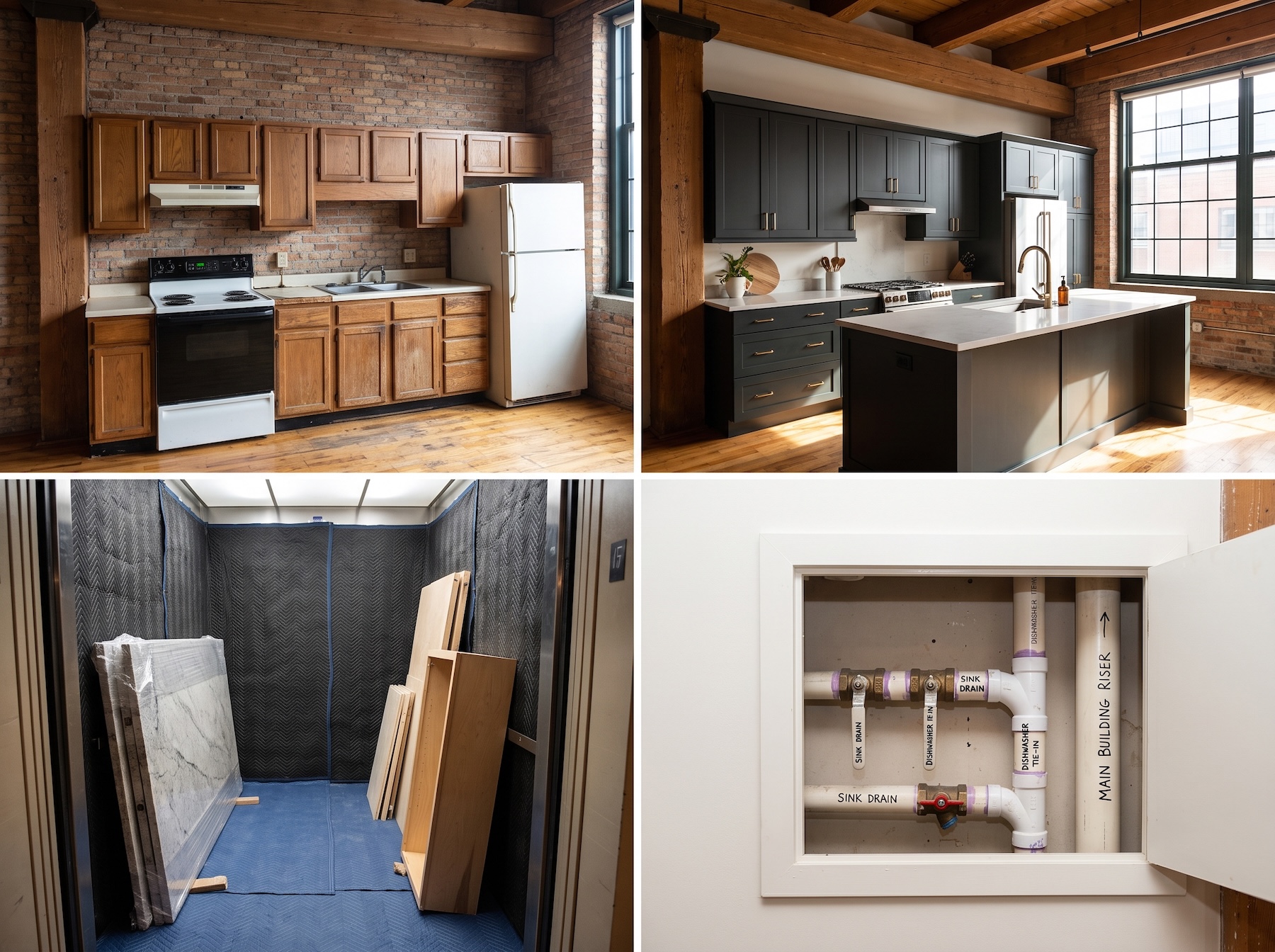
Local labor, older building conditions, and the reality of getting materials up to a third-floor walk-up or through a high-rise freight elevator all move the number. Refacing tends to be the least disruptive path, often a few days rather than a few weeks, which matters if you cannot lose your kitchen for a month. That convenience is a genuine part of its value, not a gimmick.
What Refacing Cannot Fix
Refacing is a finish. It does not touch the bones. Be clear-eyed about the following before you commit.
Layout and storage. New doors will not add a pantry, widen a walkway, or fix a dead corner. If your kitchen does not function, refacing gives you a better-looking version of a kitchen that still does not function.
Failing boxes. Swollen particleboard, soft bottoms under the sink, racked frames, and blown-out hinge screws are structural problems. A veneer will not stop the decline; it hides it temporarily.
Odd or vintage footprints. Chicago's older kitchens are full of quirks: chimney chases, offset windows, plaster walls that are not square, radiators eating wall space. Stock refacing components assume standard boxes. Custom work is what actually solves these.
A true built-in look. Integrated lighting, custom crown that meets original trim, furniture-grade detailing, seamless panels over appliances: those are built, not refaced.
When Replacement or Custom Cabinetry Wins
When the boxes are gone, the layout needs to change, or the look you want is specific, new cabinetry is the honest answer. This is where custom carpentry and built-ins earn their cost, not because custom is always better, but because it solves problems refacing cannot.
On a recent Bucktown project in a 1920s home, the goal was floor-to-ceiling built-ins flanking the original fireplace. We used painted maple shaker doors, soft-close hardware, integrated LED lighting, and crown molding milled to match the home's original trim, with open shelving sized for a 200-plus-book collection. None of that exists as a refacing product. It works only because the cabinetry was designed and built for that specific wall.
On a South Loop loft kitchen in a historic brick-and-timber building, custom cabinetry was drawn to complement exposed brick and heavy timber beams, with a built-in booth dining area that hid storage and a peninsula that made the open plan work. A refaced stock kitchen would have looked pasted into that space. Custom kitchen cabinets in Chicago lofts and vintage homes are less about luxury and more about fit: the building dictates the cabinetry, not the other way around.
New cabinetry also pairs naturally with the rest of a kitchen upgrade. If you are already choosing countertops and fixtures, our guide to selecting kitchen cabinets, fixtures, and countertops in Chicago walks through how those decisions fit together.
Cabinets Are One Piece of a Bigger Kitchen Decision
Whether you reface or replace, cabinets rarely change on their own. Wood Contracting handles kitchen remodeling and bathroom remodeling across the city, along with condo renovation, whole home renovation, and basement finishing when a project reaches beyond the kitchen. If your kitchen needs more than a new face, it helps to plan the whole thing at once rather than in pieces.
Kitchen Cabinet Refacing FAQ
Is cabinet refacing worth it?
Cabinet refacing is worth it when your cabinet boxes are solid and your layout already works. In that situation it delivers a dramatically updated look for far less money and disruption than a full replacement. It is not worth it if the boxes are damaged or you are unhappy with how the kitchen functions, because refacing changes only the surface.
How much does cabinet refacing cost in Chicago?
Nationally, refacing averages around $7,235 and commonly runs $5,000 to $13,000 depending on kitchen size and materials, per 2026 data from Angi and HomeGuide. Chicago pricing shifts with labor, building access, and cabinet count, so treat those as a starting range rather than a quote. Solid-wood door upgrades push toward the high end, while laminate and thermofoil sit lower.
Refacing vs. replacing cabinets: which is cheaper?
Refacing is usually cheaper than full replacement, often by a meaningful margin. The catch is that a high-end reface and a mid-range replacement can overlap in price, so at the top of the refacing range you should seriously compare new cabinets. Refinishing, meaning repainting existing doors, is the cheapest option of all if the doors themselves are in good shape.
When should I replace cabinets instead of refacing?
Replace when the boxes are water-damaged, swollen, or structurally loose, when you want to change the layout, or when you need storage built for an unusual footprint. Older Chicago kitchens with plaster walls, chimney chases, and offset windows often fall into this category. If you are moving plumbing or opening up the space anyway, new cabinetry is usually the better spend.
How long does cabinet refacing take?
Refacing is typically a few days, which is one of its biggest advantages over a full replacement that can run a few weeks. That short timeline matters if you cannot go long without a working kitchen. New or custom cabinetry takes longer because of fabrication and installation, but you get a build made for your space.
Does refacing add value to a Chicago home?
A clean, updated kitchen helps resale, and refacing can deliver that look affordably when the underlying kitchen is sound. In vintage or high-end Chicago homes, though, buyers and appraisers notice the difference between surface updates and genuine custom cabinetry. If you are remodeling to sell soon, refacing can be smart; if you are staying and want the kitchen to fit the home, custom often pays off more.