

How Do You Choose Cabinets, Fixtures, and Countertops for a Chicago Kitchen?
Choose them in this order: kitchen cabinets first, because they set the layout, the storage, and roughly half the budget; then the countertop, which is both your main work surface and the biggest visual in the room; then the fixtures, the sink and faucet that have to match how you actually cook. In a Chicago condo or loft, the building decides more than the showroom does. The footprint, the existing plumbing location, and how the kitchen opens into the living space all shape what is realistic before style ever enters the conversation.
We make these calls constantly on kitchen remodeling projects across the city, from West Loop lofts and River North high-rises to vintage two-flats in Logan Square. The cabinets, counters, and fixtures that work in a new construction condo are not always the ones that fit a 1900s home with plaster walls and a chimney chase in the corner. Here is how to think through each piece.
How Do You Choose Kitchen Cabinets for a Chicago Home or Condo?
Cabinets are the biggest single decision in the kitchen, so settle three things in order: construction quality, then door style, then color. Nearly 7 in 10 renovating homeowners replace all of their cabinets during a kitchen upgrade, according to the 2025 U.S. Houzz Kitchen Trends Study, so this is usually the part of the project you live with the longest.
Stock, semi-custom, or custom?
Stock cabinets are the most affordable and come in fixed sizes. Semi-custom gives you more sizes, finishes, and modifications. Custom is built to your exact dimensions, which is what older and oddly shaped Chicago kitchens often need. Soffits, radiators, out-of-square walls, exposed loft columns, and vintage proportions rarely line up with a 3-inch size grid, and forcing stock boxes into them leaves filler panels and dead corners.
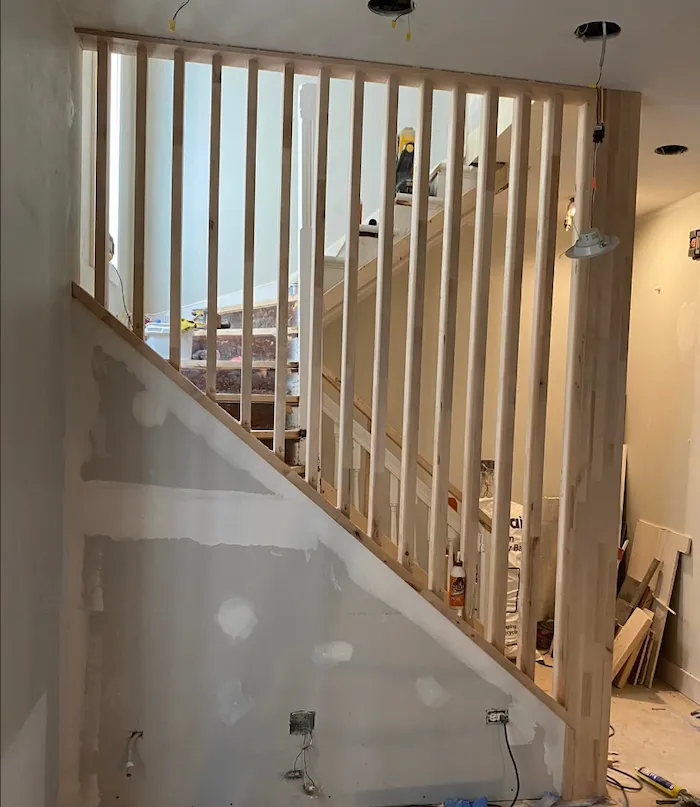
On a South Loop loft kitchen, we built custom carpentry and built-ins to complement the exposed brick and timber rather than fight it, including a peninsula that maximized storage while keeping the open feel, plus a built-in booth with hidden storage. On a Bucktown project in a 1920s home, painted maple shaker cabinetry with soft-close hardware was matched to the original crown molding so the new work read as if it had always been there. That kind of fit is the real argument for going custom in a condo renovation or a vintage house.
Door style and color
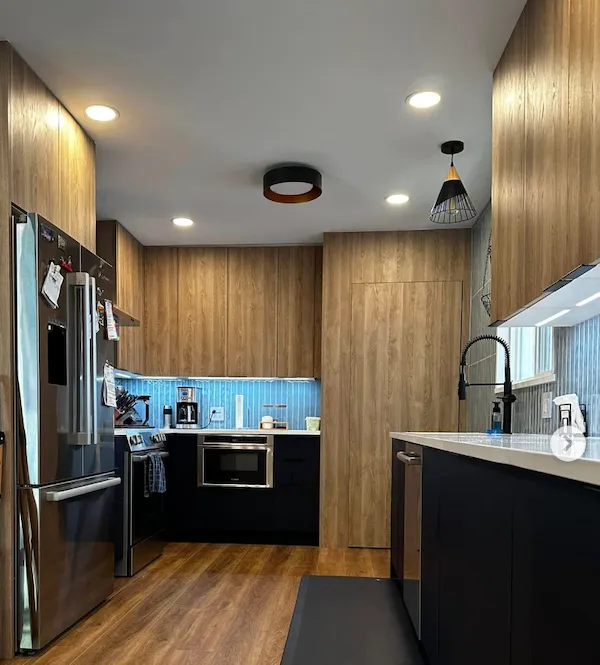
Shaker is still the default door and works in nearly every Chicago building type, but flat-panel (slab) and inset doors are gaining ground for a cleaner, more architectural look. The bigger shift is color. Wood grain has surpassed painted as the trend to watch, with 59% of pros naming it as growing and white oak the most popular wood at 51% in the 2026 NKBA KBIS Kitchen Trends Report.
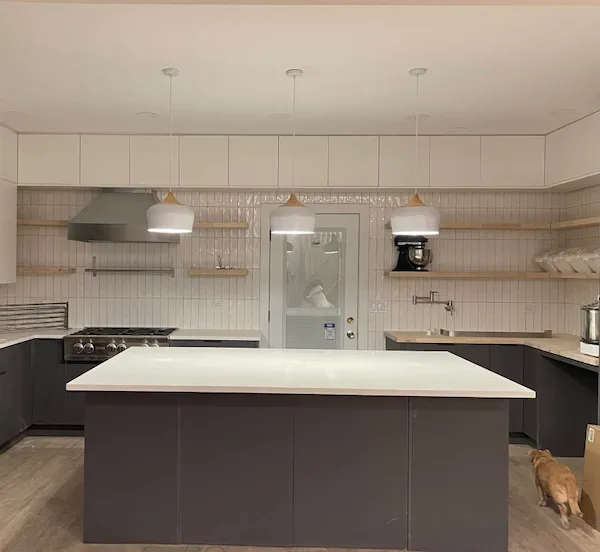
Homeowner choices are split: white leads cabinet colors at 33% with wood right behind at 23% in the Houzz study, which is why two-tone kitchens (a lighter perimeter with a wood or deep-green island) are so popular right now. If you want one accent move, a run of glass-front cabinets is the most-chosen accent style at 36%. In a loft or open-plan condo where the kitchen is always in view, those choices matter more because the cabinets read as furniture in the living space.
Construction details that matter in Chicago
The finish gets the attention, but the box determines how long the kitchen lasts. Specify plywood cabinet boxes over particleboard, especially along exterior walls and near radiators where Chicago's humidity swings and dry winter heat punish cheaper materials. Look for full-extension, soft-close drawers on metal glides and dovetailed drawer boxes; these are the details that separate cabinetry that holds up from cabinetry that sags in five years.
Which Kitchen Countertop Should You Choose?
Match the countertop to how you cook and how much maintenance you will actually tolerate. Quartz is the low-maintenance workhorse, quartzite and granite are natural stones that take heat and last, marble rewards looks over practicality, and butcher block adds warmth on an island. Nearly all renovating homeowners (91%) upgrade their countertops, per the Houzz study, so it is rarely worth keeping the old ones.
Quartz versus natural stone
Quartz is engineered, color-consistent, and needs no sealing, which makes it the easy choice for busy family kitchens. Natural quartzite is nearly as hard, handles heat better, and gives you real stone movement, though it needs periodic sealing; it is named by 62% of pros for countertops in the 2026 NKBA report, right behind quartz. Marble looks unmatched but etches and stains, so it suits a baker or a light-use kitchen more than a household with kids. (For a deeper quartz-versus-marble breakdown, that comparison deserves its own conversation during selections.)
Color, edges, and the backsplash
White and off-white still dominate counters (41% and 23% in the Houzz study), with black the popular contrast, including on nearly one in five islands. Full-height slab backsplashes that run the counter material up the wall are a strong trend, with backsplash coverage rising to 67%, and they read seamless because there is no grout line to interrupt the stone. A waterfall island edge is a clean look but adds slab and fabrication cost, so budget for it deliberately.
The condo and loft logistics nobody mentions
Stone slabs are heavy and large, and getting them into a high-rise unit is its own project. A full slab may not fit a residential freight elevator or turn a tight stairwell, which can force an extra seam or a smaller piece, so the fabricator needs to template with the building's access in mind, not just the kitchen. We plan slab delivery and any seams around freight elevator size and reservation windows on every high-rise job, the same way we coordinate the rest of a downtown remodel.
What Kitchen Sink and Faucet Should You Choose?
Pick the sink for how you cook, then match the faucet to the sink and your workflow. For most kitchens that means a large single-bowl undermount sink, which keeps the counter clean and handles oversized pans better than a divided bowl. Save the divided bowl for households that genuinely wash and rinse in separate sides.
Sinks
A large single bowl makes sense in an open-plan condo where the sink is on display and you want it uncluttered. Workstation sinks, which add an integrated ledge for cutting boards, colanders, and drying racks, have moved from upgrade to expectation in serious cooks' kitchens. For material, fireclay and quality stainless both wear well; a farmhouse apron-front sink suits a vintage Chicago home, while a sleek undermount fits a modern loft.
Faucets and the extras
A pull-down faucet covers most needs; touchless operation and built-in filtration are moving into the mainstream, with specialty-feature faucets chosen by 46% of homeowners in the Houzz study. A pot filler over the range is genuinely useful only if you cook at volume and the plumbing can reach the wall, so do not add one out of habit. Whatever you choose, confirm the faucet's hole configuration matches the sink before ordering, because correcting it later can mean re-drilling stone.
Hardware and the finish story
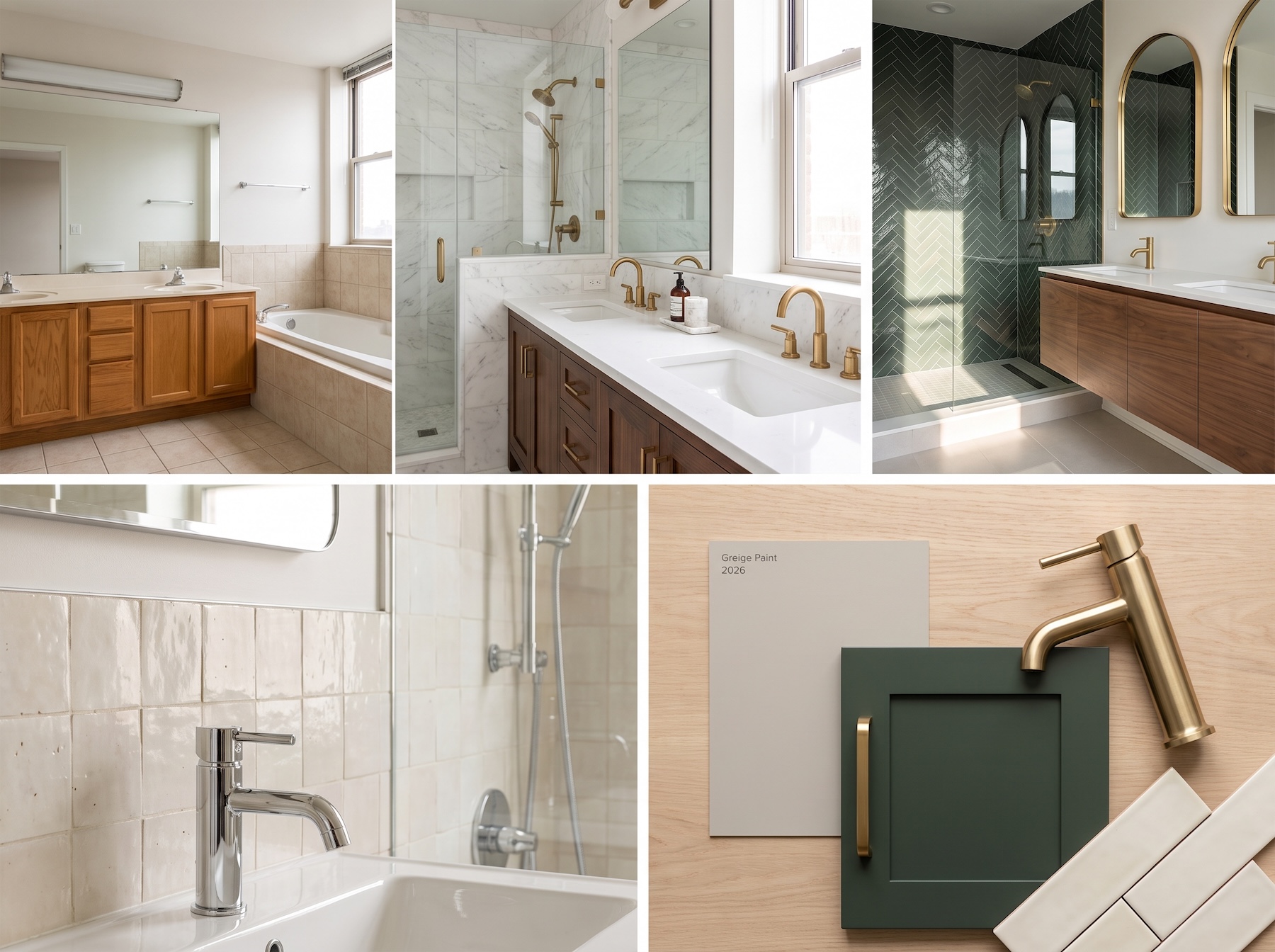
Cabinet hardware is jewelry for the kitchen and the easiest place to tie everything together. Warm metals like brushed brass and matte black are leading over polished chrome, and mixing two finishes is fine when it looks deliberate, for example a brass faucet with matte-black pulls. Keep the metals coordinated across the faucet, the hardware, and the light fixtures so the room reads as one decision.
How Do You Make Cabinets, Countertops, and Fixtures Work Together?
Pick one finish story and let all three share it, then balance the contrast: a light perimeter with a darker island, or warm wood cabinets with a cool stone counter. In an open-plan condo or loft, remember the kitchen is part of the living room, so the cabinet color and the counter should make sense from the couch, not just at the sink.
Consistency pays off across the home too. The same cabinet logic that drives a kitchen carries straight to a bathroom remodeling vanity, and repeating a wood tone or a metal finish across rooms makes a whole home renovation feel like one project rather than several. Even a compact kitchenette or wet bar added during basement finishing looks intentional when its cabinets and counter echo the main kitchen.
Cabinets, countertops, and fixtures chosen as a set, built for the way you cook, and sized to a real Chicago kitchen will outlast any single trend. If you are weighing options for a condo, a loft, or a vintage home and want a second opinion before you commit, that is the kind of detail we work through on every kitchen remodeling project.
Frequently Asked Questions About Kitchen Cabinets, Countertops, and Fixtures
Should I choose custom or stock kitchen cabinets for a Chicago condo?
Choose custom or semi-custom when your kitchen has odd dimensions, soffits, exposed columns, or vintage proportions, which describes a lot of Chicago condos and older homes. Stock cabinets save money but come in fixed sizes that leave filler panels and wasted corners in non-standard spaces. Custom cabinetry uses every inch, which often matters more in a small kitchen than in a large one.
What is the most popular kitchen cabinet color in 2026?
White still leads kitchen cabinet colors, but wood tones are closing the gap fast and are the trend most designers say is growing, with white oak the most popular wood. That is why two-tone kitchens, pairing a light perimeter with a wood or deep-green island, are so common heading into 2026.
What countertop is best for a busy kitchen?
Quartz is usually the best countertop for a busy kitchen because it resists stains and scratches and never needs sealing. If you want natural stone that still takes heat and heavy use, quartzite is the more durable choice over marble, which etches and stains more easily. Match the material to how much maintenance you will realistically keep up with.
Do I need a workstation sink?
A workstation sink is worth it if you prep a lot and want cutting boards, colanders, and drying racks to sit over the basin and free up counter space. For lighter cooking, a large single-bowl undermount sink delivers most of the benefit at a lower cost. Either way, a single deep bowl handles oversized pans better than a divided sink.
How much do new kitchen cabinets cost in Chicago?
Cabinets are typically the largest line item in a kitchen remodel, often a third to roughly half of the total budget. Stock is the least expensive, semi-custom sits in the middle, and fully custom runs highest depending on materials, finish, and complexity. In condos and high-rises, delivery and install access can add to the labor side, separate from the cabinets themselves.
What kitchen faucet finish is most popular right now?
Warm and muted finishes are leading, with brushed brass, matte black, and brushed or satin nickel chosen over polished chrome. The practical move is to coordinate the faucet finish with your cabinet hardware and light fixtures, mixing at most two metals and only when it looks deliberate.