

Why Do Pinterest-Inspired Remodels Sometimes Fail in Real Life?
You have spent months saving inspiration photos. The kitchen island with the waterfall edge. The minimalist bathroom with floating vanity. The open shelving displaying perfectly arranged dishes. These spaces look stunning in photos, but here is the question few homeowners ask before signing off on their design: Will this actually work for how I live?
According to the 2024 Houzz Kitchen Trends Study, which surveyed over 3,400 homeowners, 42% said they needed a renovation simply because they no longer liked the style of their old kitchen. Style matters. But prioritizing how a space photographs over how it functions leads to renovations that disappoint within months of completion. The most successful kitchen and bathroom remodels balance both beauty and function. One without the other leads to spaces that either disappoint visually or frustrate daily.
This guide breaks down the most common form-over-function mistakes we see in Chicago homes and how to avoid making them in your renovation.
Can a Beautiful Kitchen or Bathroom Also Have Enough Storage?
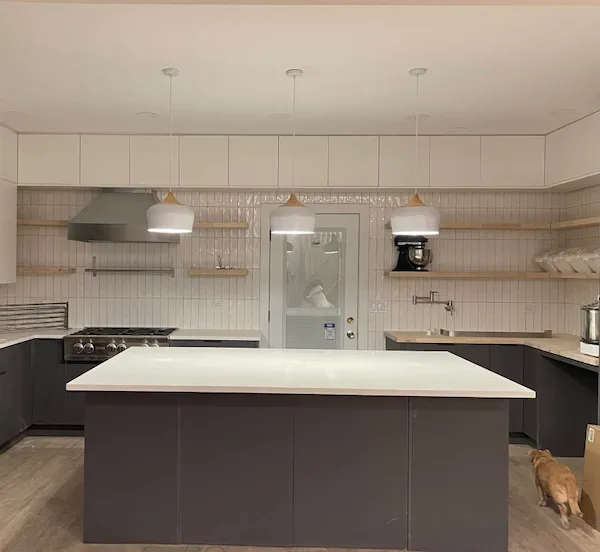
Open shelving in kitchens represents one of the most common form-over-function tradeoffs homeowners later regret. The concept looks beautiful in magazine spreads: carefully curated dishes, plants, and cookbooks artfully arranged on floating shelves. The reality for most families involves mismatched containers, everyday dishes that do not photograph well, and constant dusting.
The same applies to minimalist bathroom vanities. That sleek floating vanity with a single drawer looks sophisticated, but where do the extra towels go? The hair dryer? The cleaning supplies? Medications? The typical bathroom requires storage for 50 to 100 items. When design eliminates that capacity, countertops become cluttered dumping grounds, defeating the minimalist aesthetic entirely.
The Fix: Before finalizing any design, conduct a storage audit. Inventory everything currently stored in your kitchen or bathroom, plus items you wish you had room for. Then ensure your new design accommodates at least that much, ideally more. If you love the look of open shelving, incorporate it strategically for display while keeping closed cabinets for everyday storage. The NKBA 2026 Kitchen Trends Report found that smarter storage, including floor-to-ceiling cabinetry, walk-in pantries, and islands with ample storage, is among the top trending features homeowners want (nkba.org). A professional designer will maximize every inch of available space, even in Chicago's notoriously compact condos and vintage home layouts.
How Do You Design a Remodel Around How Your Family Actually Lives?
Traffic flow is one of the most overlooked aspects of kitchen and bathroom design, yet it affects how comfortable a space feels every single day. Poor flow creates bottlenecks, cramped feelings, and daily frustrations that no amount of beautiful tile can fix.
Consider how your family actually uses your kitchen. Where do the groceries land when you come home? Where does the mail pile up? Where do kids do homework while you cook? Where does the coffee station need to be so you are not bumping into the person making breakfast? A layout designed without these patterns in mind creates a space that looks good but feels uncomfortable to live in.
A common example is the oversized kitchen island. It looks impressive in photos and provides beautiful counter space, but if it interrupts the natural flow between your refrigerator, sink, and stove, cooking becomes a daily obstacle course. According to the 2024 Houzz study, more than 2 in 5 homeowners now opt for islands that are 7 feet or longer, a trend that has increased by 10 points since 2020 (houzz.com). But bigger is not always better if it blocks your work triangle. Similarly, bathroom layouts that place the toilet directly visible from the doorway or position the vanity where two people cannot get ready simultaneously create friction in daily routines.
The Fix: Before finalizing your layout, walk through a typical day mentally. Map out where you walk most often, what you reach for first thing in the morning, and where congestion happens when multiple family members use the space. The best layouts allow movement even when several people share the space. For kitchens, maintain the work triangle principle with 4 to 9 feet between your sink, stove, and refrigerator. For bathrooms, ensure adequate clearance around fixtures and plan for simultaneous use if multiple people get ready at the same time.
Why Is Lighting One of the Biggest Remodel Mistakes?
Lighting is one of the most overlooked aspects of kitchen and bathroom remodeling, yet it dramatically affects both function and ambiance. According to the National Kitchen and Bath Association's 2026 Bath Trends Report, 91% of industry experts surveyed said lighting quality is a top consideration in bathroom design, and 92% agree that task lighting should always be included in the primary bath (nkba.org). Despite this industry consensus, homeowners often regret relying on a single overhead fixture, creating spaces that feel either too harsh or too dim.
A kitchen with only recessed ceiling lights might provide adequate brightness for general tasks but creates shadows on countertops where you actually prep food. A bathroom with a single overhead light casts unflattering shadows across your face, making grooming tasks difficult. These lighting deficiencies make well-designed spaces feel dark, uninviting, and difficult to use.
The Fix: Plan a layered lighting scheme that includes three types of light working together. Ambient lighting provides overall illumination through ceiling fixtures or recessed lights, ideally on dimmers. Task lighting illuminates work surfaces where you actually need to see clearly, such as under-cabinet lights in kitchens and sconces flanking bathroom mirrors. Accent lighting highlights architectural features or decorative elements, adding warmth and character to the space.
In kitchens, this means recessed ceiling fixtures for general light, LED strips under cabinets for task lighting where you prep food, and pendant lights over islands for ambient glow. The NKBA 2026 Kitchen Trends Report found that the most important kitchen design considerations for homeowners include natural lighting (95%), quality lighting (93%), and task lighting for work zones (92%) (nkba.org). In bathrooms, combine ceiling fixtures with vertical sconces at eye level beside the mirror, not above it, which eliminates the shadows that overhead lighting creates. Dimmer switches on all circuits allow adjustment for different times of day and activities.
Should You Follow Remodeling Trends or Choose Timeless Design?
A splashy backsplash, trendy cabinet color, or unique fixture might look amazing online, but these design choices can quickly become dated and costly to reverse. Style regret is one of the more subtle but financially impactful mistakes homeowners make.
Bold colored cabinets, intricate wallpaper patterns, or highly specific design trends might be popular today, but tastes change. When these elements feel dated in five years, you are facing another costly renovation. Similarly, choosing beautiful but impractical materials leads to frustration. Marble countertops are undeniably luxurious, but the soft, porous stone stains easily and requires constant maintenance. Many homeowners who chose marble later swap it for more durable alternatives.
The Fix: Invest in timeless elements for the bones of your renovation: cabinetry, countertops, flooring, and major fixtures. These should be classic choices that will age well. The NKBA found that transitional and timeless design tops the style list, with 70% of bath industry respondents and 72% of kitchen respondents naming it as a popular style for the next three years (nkba.org). Add personality through smaller, easily changeable details like paint, hardware, light fixtures, and accessories. This approach lets you refresh your space without undergoing another major renovation. When selecting materials, consider not just how they look but how they perform day to day. Will that beautiful tile be easy to clean? Will that finish show water spots?
How Do You Avoid Appliance Door Collisions in a Kitchen Layout?
One of the most common form-over-function mistakes involves not considering how appliances, cabinets, and doors interact when open. A design might look perfect on paper, but if the dishwasher door blocks the cabinet where you keep dishes, unloading becomes a frustrating multi-step process. If the oven door hits the island when open, cooking becomes an obstacle course.
This issue extends to bathrooms as well. Shower doors that hit the toilet, vanity drawers that cannot fully open because they hit the door frame, or medicine cabinets that block the light fixture when open all create daily annoyances that accumulate over time.
The Fix: Before finalizing any layout, map out the swing of every door, drawer, and appliance. Open the dishwasher: can you access the cabinet above? Open the oven: is there adequate landing space for hot pans? Does the refrigerator door clear the island? In bathrooms, ensure shower doors have adequate swing space, vanity drawers open fully, and cabinet doors do not hit fixtures or walls. This level of detail during the design phase prevents years of small frustrations.
Are You Designing Your Kitchen for Instagram or for Real Life?
Social media has created a phenomenon where homeowners design spaces to be photographed rather than lived in. The result is beautiful rooms that do not actually support daily activities. Kitchens without adequate counter space because everything went to a massive island. Bathrooms with freestanding tubs that look stunning but are uncomfortable to use and difficult to clean around. Minimalist designs that offer no place for the messy realities of daily life.
The Fix: Before making any design decision, ask yourself: How will this work on a busy Tuesday morning? Not a leisurely Saturday when you are entertaining, but a regular day when everyone is rushing. Design for your actual life, not your aspirational Instagram feed. A good contractor or designer will ask detailed questions about how you use your space before suggesting layouts. They will want to know about morning routines, cooking habits, storage needs, and who uses the space together. This information shapes functional designs that also look beautiful.
How Do You Get Both Form and Function Right in a Remodel?
The best kitchen and bathroom remodels do not sacrifice either beauty or practicality. They achieve both through thoughtful planning that considers daily life alongside design preferences.
Start with function: Before selecting finishes, nail down the layout. Where does everything need to be for the space to work efficiently? What storage do you need? How will traffic flow? Once function is optimized, then layer on the aesthetic choices.
Live in your space first: If possible, live with your current layout for a few weeks while paying close attention to pain points. Where do you always bump into things? What do you reach for most often? Where does clutter accumulate? These observations inform a design that actually solves problems.
Work with professionals: Experienced designers and contractors have seen what works and what does not in spaces similar to yours. They can spot potential problems before construction begins, when changes are easy to make. A good design-build team will push back if a design choice will create functional problems, even if it looks beautiful on paper.
Build in flexibility: Consider how your needs might change. Will your family grow? Might you age in place? Does the design allow for future modifications? The best renovations solve today's problems while remaining adaptable for tomorrow.
The Bottom Line: Beautiful Spaces Need To Function
A kitchen or bathroom remodel represents a significant investment, both financially and in how you experience your home daily. The goal should never be choosing between form and function but achieving both together.
The most successful renovations start by understanding how a family actually lives, then designing a space that supports those patterns while looking beautiful. Storage, traffic flow, lighting, and practical considerations should be addressed first. Aesthetic choices follow, enhancing a foundation that already works.
When form and function work together, the result is a space that feels intuitive, looks stunning, and serves you well for years to come. That is the standard every Chicago homeowner deserves from their remodeling investment.
Ready to Plan a Remodel That Works as Good as It Looks?
Wood Contracting specializes in kitchen and bathroom remodeling throughout Chicago and the surrounding suburbs. We approach every project by first understanding how you live in your space, then designing solutions that balance aesthetics with everyday function. From Lincoln Park condos to suburban single-family homes, we create spaces that our clients love using, not just looking at.
Schedule a free consultation to discuss your renovation project and discover how thoughtful design creates spaces that are both beautiful and brilliantly functional.