

What Is the Best Tile for a Chicago Bathroom Remodel?
The tile you choose for your bathroom remodeling project affects more than how the room looks. It determines how well your bathroom handles daily moisture, how easy it is to clean, and how long the surfaces last before needing attention. In Chicago, where high-rise condos demand bulletproof waterproofing and vintage homes face their own moisture challenges, selecting the right tile is a durability decision as much as a design one.
Is Natural Stone a Good Choice for Bathroom Tile?
Marble and travertine are beautiful materials, but they are not ideal for shower walls, shower floors, or other areas with constant water exposure. The reason comes down to porosity: natural stones absorb moisture, and that absorbed moisture creates long-term maintenance problems that most homeowners do not anticipate when they fall in love with the look at the showroom.
Marble
Marble is a porous stone that absorbs water if left unsealed. Over time, moisture that penetrates the surface can cause discoloration, staining, and even mold growth within the stone. Marble also reacts to acidic substances (including many common bathroom cleaners), which can etch and dull the surface. To manage this, marble requires sealing every one to two years in bathroom environments, with diligent cleaning habits in between. For a shower that gets daily use, that is a significant ongoing maintenance commitment.
Travertine
Travertine is even more problematic in wet areas. Its naturally pitted, porous surface absorbs moisture readily, and that trapped moisture can lead to mold and mildew growing inside the stone's pores. Over time, travertine shower tile can develop black discoloration from mold buildup that is difficult to remove without professional restoration. Like marble, travertine requires regular sealing, but its higher porosity means it demands even more frequent attention to prevent water damage, odors, and biological growth.
For Chicago condo renovation projects especially, where a waterproofing failure can damage the unit below you, choosing a porous stone for shower surfaces introduces unnecessary risk on top of the maintenance burden.
Are Quartzite and Granite Better Than Marble for Bathroom Tile?
If you love the look of natural stone and want to use it in your bathroom, quartzite and granite are significantly better choices than marble or travertine. Both materials have much lower water absorption rates, with granite typically measuring around 0.2% to 0.3% absorption and quartzite offering similarly low porosity due to its dense mineral composition.
Quartzite has gained popularity for bathroom applications because its low porosity makes it naturally resistant to moisture penetration. Granite offers similar density and water resistance. Both are viable for shower walls, bathroom floors, and vanity surrounds where you want the character of real stone without the maintenance headaches of marble.
One important note: even quartzite and granite should be sealed after installation to maximize their moisture resistance. The difference is that these denser stones hold up far better between sealings and do not carry the same mold and discoloration risks as softer, more porous stones.
Why Are Porcelain and Ceramic the Best-Performing Bathroom Tiles?
For the majority of Chicago bathroom remodels, porcelain tile is the top recommendation. According to the Tile Council of North America, porcelain tile must have a water absorption rate of 0.5% or less per ASTM C373 testing, classifying it as "impervious." That means porcelain tile is essentially waterproof: it will not absorb moisture, will not harbor mold or bacteria within the tile body, and will not discolor from water exposure.
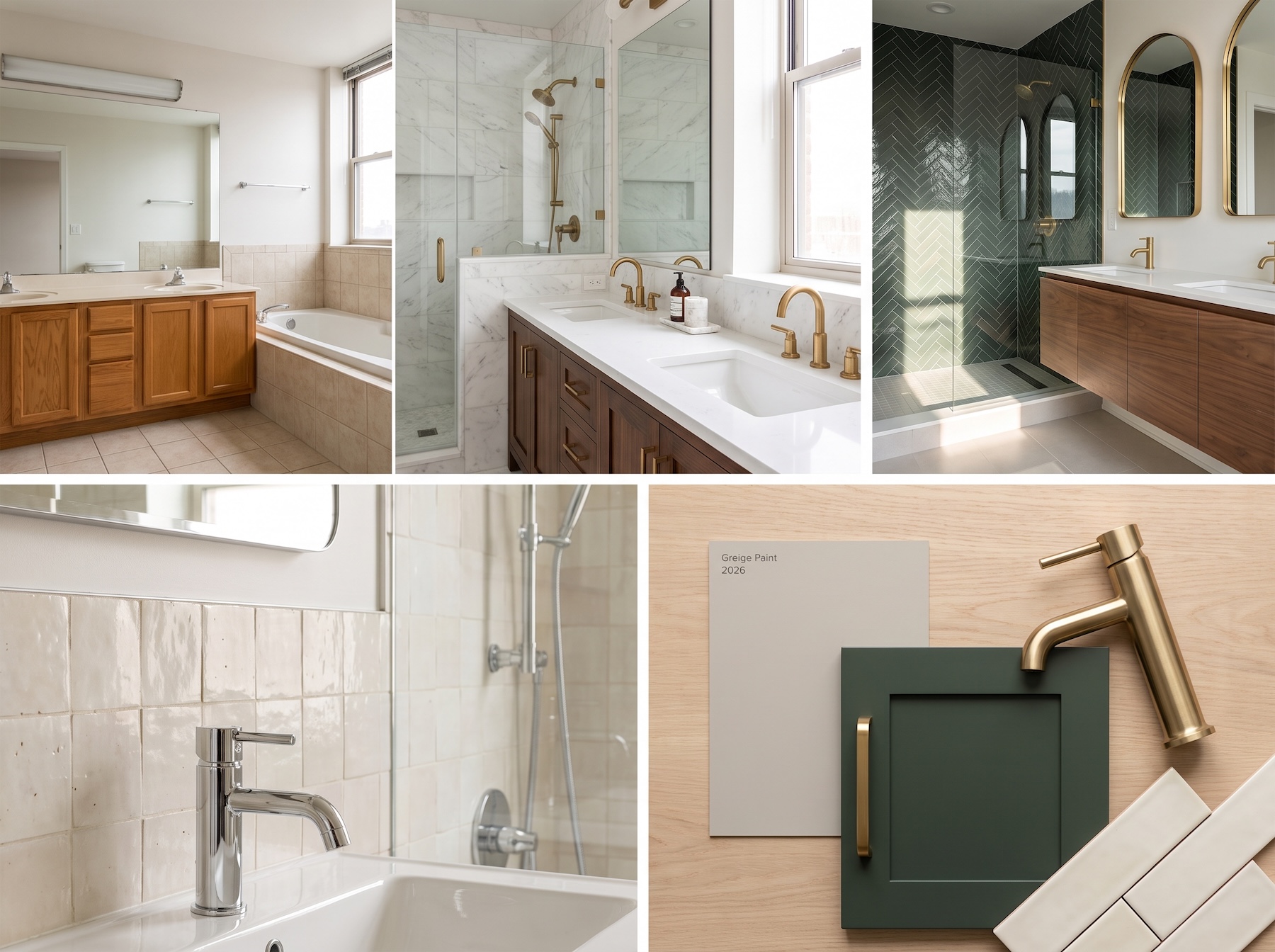
Glazed ceramic tile is another excellent option. The glaze creates a sealed, non-porous surface that repels water and makes cleaning simple. Both porcelain and glazed ceramic are available in a huge range of styles, including convincing stone-look, wood-look, and concrete-look finishes that give you the aesthetic of natural materials with none of the absorption problems. Floor & Decor carries extensive porcelain collections specifically designed for bathroom applications, from large-format wall panels to textured shower floor tiles.
For homeowners in neighborhoods like Lincoln Park, Gold Coast, and West Loop who want a high-end look, porcelain tiles that mimic marble veining have become a go-to solution. You get the visual impact of Calacatta or Carrara marble without any of the sealing, staining, or mold concerns. It is one of the most popular choices we see in Chicago kitchen remodeling and bathroom projects alike.
Are Larger Tiles Better for Bathrooms?
Tile size matters more than most homeowners realize, and in bathrooms, bigger is generally better. Large-format tiles (24 inches or larger) have fewer grout lines, which directly translates to less maintenance and a cleaner-looking bathroom over time.
Fewer grout lines mean fewer places for mildew, soap scum, and grime to accumulate. In a shower especially, this makes a noticeable difference in how easy the space is to keep clean week to week. Grout joints are the most maintenance-intensive part of any tiled surface, so reducing the number of joints reduces the time and effort you spend scrubbing.
Large-format tiles also create a more seamless, open visual. In smaller Chicago bathrooms (common in vintage bungalows, condos, and Old Town walk-ups), large tiles make the room feel more spacious because the eye reads a continuous surface rather than a grid of small squares. This is a key reason large-format porcelain is one of the top bathroom tile trends for 2026.
The trade-off is that large-format tiles require a perfectly flat substrate. Any imperfections in the wall or floor will show, so proper surface preparation is essential. For whole home renovation projects where walls and floors are already being addressed, this is rarely an issue. In older Chicago homes, your contractor should plan for leveling work before tile installation begins.
How Do You Choose the Right Grout for a Bathroom Remodel?
You can choose the perfect tile and still end up with a bathroom that is hard to keep clean if you pick the wrong grout. Standard cement-based grout is porous, meaning it absorbs water, stains, and soap residue over time. In a shower, cement grout often discolors within a year or two and becomes a breeding ground for mildew unless it is sealed regularly.
Epoxy grout is the best option for bathrooms, especially in showers and other wet areas. Unlike cement-based grout, epoxy grout is made from resins and a hardener that create a non-porous, waterproof joint. It does not absorb water, does not stain, and does not require sealing. According to Mapei's technical team, epoxy grouts are "the most water- and stain-resistant of all grouts" for shower applications. Their Kerapoxy CQ product is a two-component, 100% solids epoxy specifically designed for wet areas.
Floor & Decor's grout buying guide echoes this recommendation, noting that epoxy or single-component grout is "typically the best choice" for showers and wet areas due to its superior water and stain resistance. They carry Mapei Kerapoxy CQ along with other epoxy options like Laticrete Spectralock for homeowners who want the performance of epoxy with a simpler application process.
Epoxy grout does cost more and requires an experienced installer, but the long-term payoff is significant: your grout joints stay clean, maintain their color, and never need sealing. For a Chicago bathroom that needs to perform year after year, epoxy grout is the right investment.
Whether you are remodeling a primary bathroom in a Wicker Park greystone, updating a guest bath in a Streeterville high-rise, or tackling a full Bucktown two-flat renovation, the combination of low-absorption tile, large-format sizing, and epoxy grout delivers a bathroom that looks clean, stays clean, and stands up to daily use for 15 to 20 years.
Frequently Asked Questions About Bathroom Tile in Chicago
What is the best tile for a bathroom shower in Chicago?
Porcelain tile is the best choice for bathroom showers. It has a water absorption rate of 0.5% or less per ASTM C373 standards, making it essentially impervious to moisture. Porcelain does not require sealing, resists mold growth, and is available in styles that mimic marble, wood, and concrete.
Is marble tile a good choice for a bathroom?
Marble is not ideal for shower walls or floors because it is a porous stone that absorbs moisture. Over time, this can lead to discoloration, staining, and even mold growth within the stone. Marble also requires sealing every one to two years and reacts to acidic cleaners, making it higher-maintenance than porcelain or ceramic alternatives.
Why should I avoid travertine tile in a shower?
Travertine has a naturally pitted, porous surface that absorbs moisture readily. Trapped moisture can cause mold and mildew to grow inside the stone's pores, leading to black discoloration and unpleasant odors that are difficult to remove. Travertine requires frequent sealing and careful maintenance that most homeowners find impractical for daily-use showers.
Are quartzite and granite good for bathroom tile?
Yes. Both quartzite and granite have significantly lower water absorption rates than marble or travertine. Granite typically measures around 0.2% to 0.3% absorption, and quartzite offers similarly low porosity. Both are viable for shower walls and bathroom floors when you want real stone with better moisture resistance.
Should I use large-format or small-format tile in my bathroom?
Large-format tiles (24 inches or larger) are generally the better choice. Fewer grout lines mean less maintenance, less mildew buildup, and a cleaner visual. Large tiles also make small bathrooms feel more spacious. The trade-off is that installation requires a perfectly flat substrate, so surface preparation is important.
What is the best grout for a bathroom shower?
Epoxy grout is the best grout for showers and wet areas. Unlike cement-based grout, epoxy grout is non-porous and does not absorb water or stains. Mapei's Kerapoxy CQ and Laticrete's Spectralock are two popular epoxy options recommended by both Mapei and Floor & Decor for shower applications. Epoxy grout costs more but never needs sealing.
Why does grout get moldy in my shower?
Standard cement-based grout is porous, meaning it absorbs water and soap residue over time. That trapped moisture creates the perfect environment for mold and mildew growth. Switching to epoxy grout eliminates this problem because epoxy creates a non-porous, waterproof joint that does not absorb moisture.
Can I get the look of marble without using real marble in my bathroom?
Yes. Porcelain tiles that mimic marble veining (Calacatta, Carrara patterns) are one of the most popular choices for Chicago bathroom remodels. You get the visual impact of natural marble without the sealing, staining, or mold concerns.
How often do I need to seal natural stone tile in a bathroom?
Marble and travertine should be sealed every one to two years in bathrooms. Denser stones like quartzite and granite hold up better between sealings. Porcelain and glazed ceramic do not require sealing at all, which is a major maintenance advantage.
Ready to Choose the Right Tile for Your Chicago Bathroom?
Wood Contracting helps Chicago homeowners and condo owners choose materials that look great and perform for the long term. From bathroom remodeling and kitchen remodeling to basement finishing and custom carpentry and built-ins, every project gets the same attention to detail. Schedule a free consultation to talk through your project.