

How Much Space Do You Need to Add Seating to a Kitchen Island?
Plan on about 24 inches of counter width per stool and 12 to 15 inches of countertop overhang for knees, then leave at least 36 to 44 inches of clear floor behind the stools so people can pull out and walk past. Those three numbers decide whether kitchen island seating feels comfortable or cramped, and in a lot of Chicago kitchens they also decide whether a seated island fits at all. The honest first question is not what stools to buy. It is whether your room has the depth to give up a full walkway on one side of the island.
We work through this on kitchen remodeling projects across the city, from open-plan lofts in South Loop and West Loop to vintage layouts in Lincoln Park two-flats. A suburban kitchen can usually absorb a big island with four stools on one side. A city condo often cannot, and forcing it leads to a walkway so tight two people cannot pass. The good news is that an island is not the only way to get seating, and sometimes it is not the best way.
Island, Peninsula, or Booth: What Actually Fits a Chicago Kitchen?
A freestanding island with seating needs clear floor on all four sides, which is a lot to ask of a city kitchen. Before committing to one, weigh two alternatives that deliver the same gathering spot in less space: a peninsula and a built-in booth. The right answer depends on the room's shape, not on which looks best in a showroom.
When a peninsula beats an island
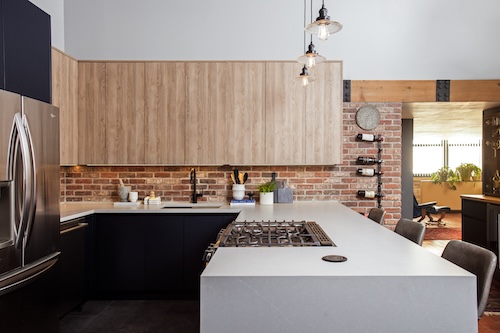
A peninsula is an island with one end attached to a wall or a run of cabinets, so it only needs clearance on two or three sides instead of four. In a galley or L-shaped kitchen under about 10 feet wide, a peninsula gives you nearly all the benefit of an island, seating, storage, and extra counter, without the walkway that a floating island demands. On a recent South Loop loft kitchen, we used a peninsula precisely because the exposed brick and timber left no room for a true island. It maximized storage and kept the open feel while still giving the owners a place to sit at the counter.
When a built-in booth wins
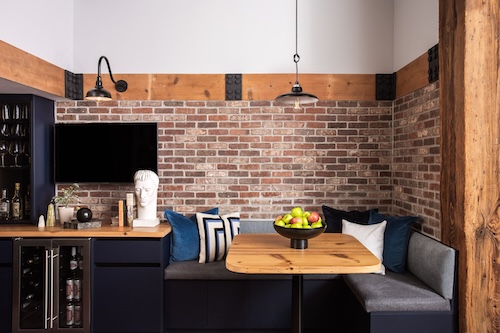
When you want real dining rather than perch-and-go stools, a built-in booth can seat more people in less square footage than chairs that need pull-out room behind them. Bench seating tucks against a wall or the back of the island, and the base doubles as storage. That same South Loop loft got a built-in booth dining area with hidden storage and a dry bar, built by our custom carpentry and built-ins shop. For a condo where every square foot counts, a booth often outperforms a wider island, which is the kind of trade-off worth weighing early in a condo renovation.
How Much Overhang Does Kitchen Island Seating Need?
For comfortable seating you want 12 to 15 inches of countertop overhang past the cabinet base, so knees and feet have somewhere to go. Anything less than about 10 inches and people sit with their legs pinned against the cabinet. The overhang is also a structural decision, not just a comfort one. A stone counter that floats more than roughly 12 inches past its base needs hidden support, or it can crack at the seam over time.
Counter height or bar height?
Most island seating today is counter height, meaning the seating surface matches the standard 36-inch counter and you use 24-inch stools. It keeps the island as one clean surface and works well in open-plan condos where the kitchen is always in view. Bar height raises a section to about 42 inches with 30-inch stools, which hides cooktop clutter from the seated side but breaks the counter into two levels. In a loft or a sightline-heavy condo, a single counter-height run usually looks better; in a busy family kitchen, the raised bar earns its keep by screening the mess.
Supporting the overhang
A seating overhang past 12 inches needs something carrying the load beyond the cabinet box. The cleanest solution is flat steel plates set into the cabinetry so nothing shows from below and knees stay clear, which is what we spec on most jobs. Decorative wood corbels are an option in a traditional kitchen, but they eat into legroom and read heavy in a modern space. Plan the support before the slab is templated, because retrofitting brackets after the counter is set is far harder than building them in.
Designing Island Seating That Works in a Condo or Loft
In a downtown condo, the seating plan runs into the building before it runs into the design. Clearance, electrical, and slab delivery all shape what is realistic, and they are the details that separate a seating area that works from one that looks good on paper.
Walkways come first. The kitchen planning guidelines published by the National Kitchen and Bath Association call for at least 36 inches of clearance behind seating, and 44 inches if it sits in a walkway people use to get through the room. In a tight condo kitchen, give the walkway priority over an extra stool; one comfortable seat beats three that block the path to the fridge. Electrical matters next, since a seated island usually wants its own outlets and lighting, which means coordinating a dedicated circuit with the building's existing panel. Finally, the countertop itself has to get upstairs. A full slab for a waterfall edge or a long seating run may not fit a residential freight elevator or turn a tight stairwell, so we template with the building's access in mind and plan any seams before fabrication, the same way we coordinate the rest of a high-rise job in River North or Streeterville.
A waterfall edge, where the counter material turns down the side to the floor, is a popular finish on a seating island, but it adds slab and fabrication cost and only suits modern and transitional kitchens. In a vintage Chicago home it can look out of place, so spend on it deliberately rather than by default.
What Does It Cost to Add Seating to a Kitchen Island in Chicago?
Seating itself is rarely a separate line item; it is folded into the island or peninsula cabinetry, the countertop, and the support. The bigger cost drivers are the counter material and the overhang. A larger seating overhang means more slab and the hidden steel to carry it, and a waterfall end can add a meaningful amount on top. For national context, cost data compiled by Angi (2026) puts the average cost to add a kitchen island around $6,000, with a wide range depending on size, materials, and whether plumbing or electrical move.
Treat that as a starting point, not a Chicago quote. In the city, the real swing comes from access and trades: getting a slab into a high-rise, running a new circuit in a concrete-deck condo, or building a custom booth all add labor that a national average never captures. A built-in booth with storage costs more than four off-the-shelf stools, but it seats more people and adds storage, which is often the better value in a small space. The honest way to price it is to start from your actual kitchen and your building, not a number off the internet.
Island seating is also one piece of a larger plan. The same logic that sizes a seating run carries into a whole home renovation, where a kitchen counter and a basement bar should feel like one project, and the cabinetry skills behind a booth are the same ones we use on a bathroom remodeling vanity or a counter and stools added during basement finishing. If you are weighing an island against a peninsula or a booth and want a read on what your space can actually hold, that is the kind of call we work through on every kitchen project.
Frequently Asked Questions About Kitchen Island Seating
How much overhang do you need for kitchen island seating?
Plan 12 to 15 inches of countertop overhang for comfortable knee room, and never go below about 10 inches. Once the overhang passes roughly 12 inches, a stone counter needs hidden steel support so it does not crack at the seam. Build that support in before the slab is templated, not after.
How many stools fit on a kitchen island?
Allow about 24 inches of counter width per stool, so a 6-foot run comfortably seats three. Crowding four stools onto that same run leaves elbows touching and feet competing for the same space. In a tight kitchen, fewer comfortable seats beat more cramped ones.
Can you add seating to a kitchen island in a small Chicago condo?
Often yes, but a peninsula or a built-in booth usually fits a small condo better than a freestanding island. An island needs clear floor on all four sides, while a peninsula only needs two or three, and a booth seats more people in less space. Walkway clearance, not style, is the deciding factor.
Is a peninsula or an island better for seating?
A peninsula is better in a galley or L-shaped kitchen under about 10 feet wide, because it gives you seating and storage without the all-around walkway a floating island demands. A full island makes sense only when the room has clearance on every side. In most city condos and lofts, the peninsula is the more practical choice.
What height should kitchen island seating be?
Counter-height seating at 36 inches with 24-inch stools keeps the island as one clean surface and suits open-plan condos. Bar-height seating at about 42 inches with 30-inch stools hides cooktop clutter from the seated side but splits the counter into two levels. Choose counter height for looks and sightlines, bar height for screening the mess.
How much does it cost to add seating to a kitchen island?
Seating is usually folded into the cabinetry and countertop cost rather than priced separately, so the material, the overhang, and any waterfall edge drive the number. National data from Angi (2026) averages around $6,000 to add an island, but Chicago costs swing on building access and whether electrical or plumbing move. A custom booth costs more than stools but seats more people and adds storage.